Browse by:

Hayek, Popper, and the Causal Theory of the Mind

Here is the introduction to Ed Feser’s paper from Hayek in Mind. In late 1952, F. A. Hayek sent his friend Karl Popper a copy of his recently published book The Sensory Order: An Inquiry into the Foundations of Theoretical Psychology. In a letter dated December 2, 1952, Popper acknowledged receipt of the book and…

Hegel and the extended mind

Anthony Crisafi and Shaun Gallagher in AI & Society (Volume 25, Number 1, 123-129): We examine the theory of the extended mind, and especially the concept of the ‘‘parity principle’’ (Clark and Chalmers in Analysis 58.1:7–19, 1998), in light of Hegel’s notion of objective spirit. This unusual combination of theories raises the question of how…

Culture wars revisited

Michael Lynch and Alan Sokal enagage in a most civil dialogue: Defending Science: An Exchange. Readers might also be interested in Susan Haack’s Defending Science-Within Reason: Between Scientism and Cynicism and James Robert Brown’s Who Rules in Science?: An Opinionated Guide to the Wars – two cracking reads – and both past contributors to EPISTEME. Alan SokalChristian fundamentalismChristianityDavid HumeEpistemologyGodMICHAEL LYNCHReason

Cosmos and Taxis

I chanced upon this painting entitled “Cosmos and Taxis“. The inspiration is, of course, as the artist states: One effect of our habitually identifying order with a made order or taxis is indeed that we tend to ascribe to all order certain properties which deliberate arrangements regularly, and with respect to some of these properties…

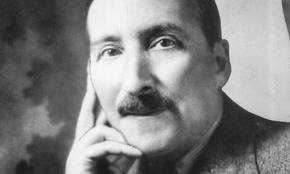
Stefan Zweig

H/T to Paul Raymont’s wonderfully eclectic Philosophy, lit, etc. for bringing my attention to this review in the Literary Review. I paste in the text just in case it becomes available by subscription only. Another, though unrelated article on Zweig, can be found in Intelligent Life:  Stefan Zweig is a writer readers either love or barely know.…

Complexity and Extended Phenomenological-Cognitive Systems

A freely available piece from Topics in Cognitive Science. With the keywords complexity; dynamical systems; extended cognition; consciousness – who could resist. In fact the whole issue is freely available from this relatively new title published under the auspices of the Cognitive Science Society. The complex systems approach to cognitive science invites a new understanding of…