
Browse by:

What to Believe Now: Applying Epistemology to Contemporary Issues

Yet another strong Wiley title. David Coady also did a fine job of guest editing EPISTEME for a themed issue on Conspiracy Theories (aside from Harry Frankfurt’s little book where else would a title in mainstream academia have the word “shit” so prominent – see Pete Mandik’s paper). David HumeEPISTEMEEpistemologyJason StanleyKnowledgeKnowledge Managementsocial epistemology
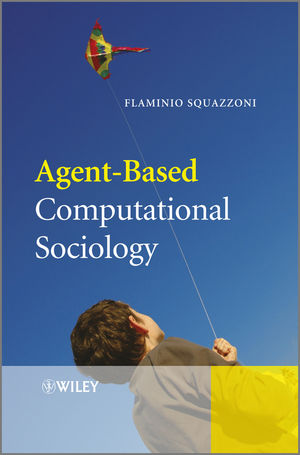
Agent-Based Computational Sociology

Check out this new book I’ve just come across – Wiley’s lists, across disciplines, is certainly looking very strong these days. Also check out two colleagues’ excellent Wiley offerings – Ted Lewis’ Network Science and of course Ken Aizawa’s and Fred Adams’ The Bounds of Cognition. Agent-based modelCognitionCognitive sciencecomplexityComputational SociologyExtended MindFred AdamsKen AizawaNetwork ScienceSimulationsocial epistemologySocial…

Symposium on Pragmatic Encroachment

Two free discussion papers from EPISTEME 9:1 EMPIRICAL TESTS OF INTEREST-RELATIVE INVARIANTISM Chandra Sekhar Sripada and Jason Stanley According to Interest-Relative Invariantism, whether an agent knows that p, or possesses other sorts of epistemic properties or relations, is in part determined by the practical costs of being wrong about p. Recent studies in experimental philosophy…

Intersubjectivity and Objectivity in Adam Smith and Edmund Husserl

This is a highly unusual collection worth checking out, co-edited by the very excellent Dagfinn Føllesdal – for the first time here is a work that seriously brings Adam Smith into the orbit of cogsci: Contents Preface Introduction Contributors Can we have objective knowledge of the world? Can we understand what is morally right or wrong?…

Clash of the Titans: When the Market and Science Collide

Coming soon the first of three papers I’ve co-authored with Dave Hardwick, this one due in Advances in Austrian Economics, Vol. 17 ABSTRACT Purpose/problem statement – The two most successful complex adaptive systems are the Market and Science, each with an inherent tendency toward epistemic imperialism. Of late, science, notably medical science, seems to have…

Global Brain

Programming the Global Brain Considering how we can improve our understanding and utilization of the emerging human-computer network constituting the global brain. (Here’s a previous post on this topic) Abraham Bernstein, Mark Klein, Thomas W. Malone New ways of combining networked humans and computers—whether they are called collective intelligence, social computing, or various other terms—are…

Hayek’s Post-Positivist Empiricism: Experience Beyond Sensation

The intro from Jan Willem Lindemans’ paper: The philosophical foundations of Hayek’s works are not beyond dispute (Gray, 1984, Kukathas, 1989, Caldwell, 1992, Hutchison, 1992): was Hayek a rationalist or an empiricist; did he follow Kant or Hume, Mises or Popper? Difficulties arise because these questions touch upon social theory, political philosophy, methodology and epistemology.…

EPISTEME: A NEW SELF-DEFINITION

With this issue Episteme makes its debut with Cambridge University Press, after eight successful years of publication at Edinburgh University Press. The journal’s new subtitle reflects a significant expansion in scope and mission. Our previous subtitle, ‘A Journal of Social Epistemology’, reflected our earlier focus on the nascent field of social epistemology. The new subtitle,…

Beyond Complexity: Can The Sensory Order Defend the Liberal Self?

My chum Chor-yung Cheung who like myself is both an Oakeshottian and a Hayekian introduces his paper below: Friedrich Hayek’s social philosophy is one of the most systematic and sophisticated among the contributions made by 20th-century liberal thinkers. His defense of the free market and individual freedom and his critique of collectivism of various kinds are…