On this day in 1904. (By the way, the image is by Warhol, 1980).
I was amazed at the stalwart technique for living some people have.

On this day in 1904. (By the way, the image is by Warhol, 1980).
I was amazed at the stalwart technique for living some people have.

Werner Herzog’s PSA documentary on texting and driving. What concerns me as well is the flip side to the coin: my daughter blithely walking in front of a vehicle while texting and with earphones in, her presence of mind severely compromised. I’ve seen her and others do it.
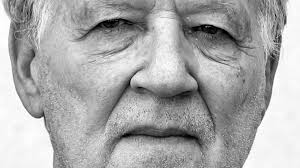
On why he stressed emotion over graphic visuals
“What was proposed to me immediately made sense. It immediately gave me the feeling I’m the right person because I don’t need to show blood and gore and wrecked cars. What I wanted to do was show the interior side of the catastrophes. …
“It’s a deep raw emotion — the kind of deep wounds that are in those who were victims of accidents and also in those who were the perpetrators. Their life has changed and they are suffering forever. They have this sense of guilt that pervades every single action, every single day, every single dream and nightmare.”
On why he included people who have caused accidents while texting
“The real essential thing is we have to see what is happening — and it’s not just an accident, not just the mechanics of an accident. It’s a new form of culture coming at us and it’s coming with great vehemence. …
“You can tell, for example, when you look at schoolyards. Kids sit around but they don’t talk. They’re all texting. And accidents have happened at a staggering rate. I mean, it’s skyrocketing. The statistics are incredible.”
On why the PSA is so lengthy
“Originally I was supposed to do four spots, 30 seconds long, but I immediately said these deep emotions, this inner landscape can only be shown if you have more time. You have to know the persons. You have to allow silences, for example, deep silences of great suffering.”
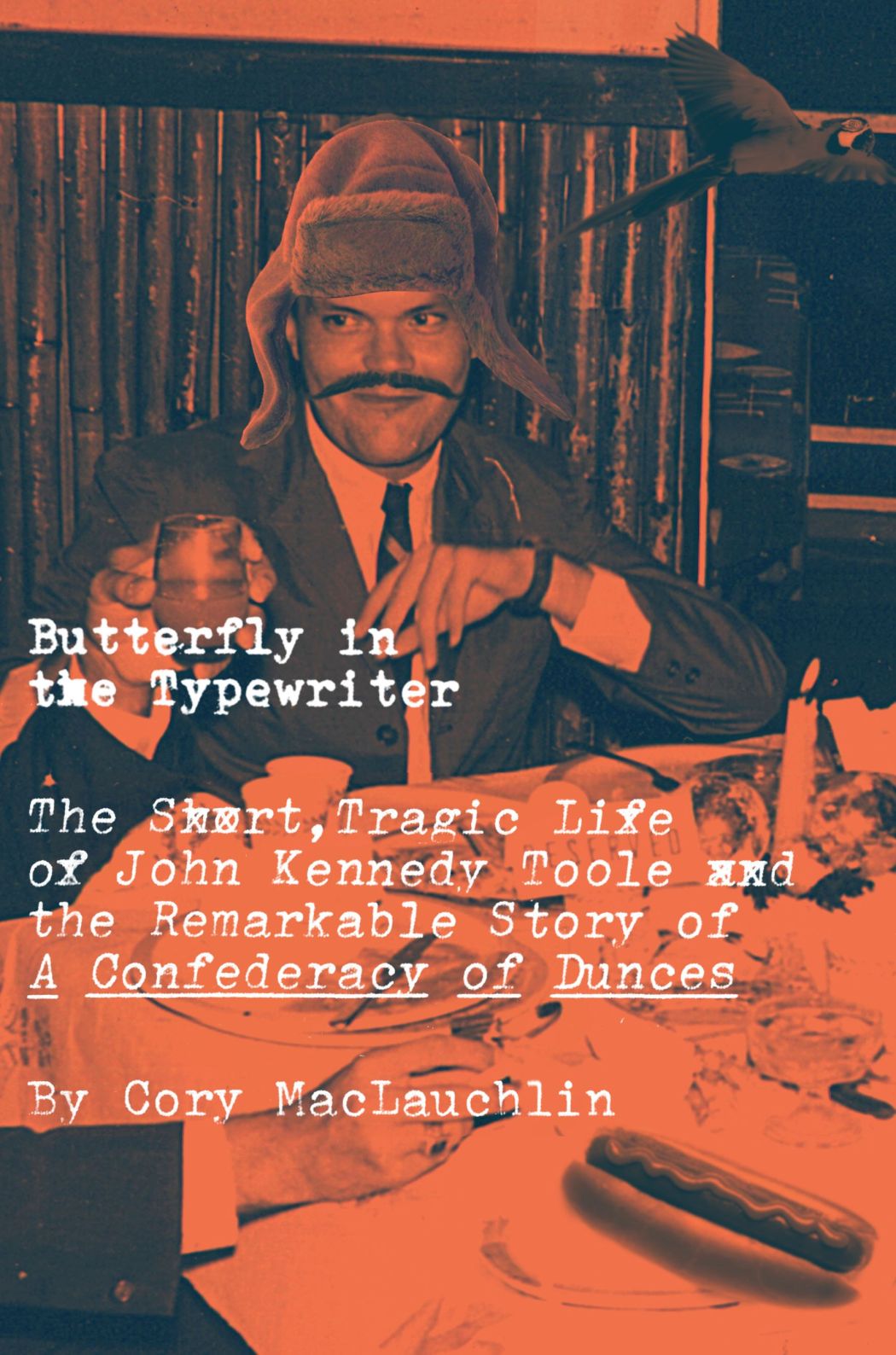
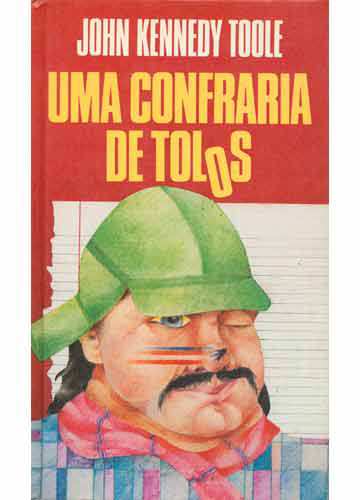
As I have told you in earlier installments, I was emulating the poet Milton by spending my youth in seclusion, meditation, and study in order to perfect my craft of writing as he did; my mother’s cataclysmic intemperance has has thrust me into the world in the most cavalier manner; my system is still in a state of flux. Therefore, I am still in the process of adapting myself to the tension of the working world (p. 87).
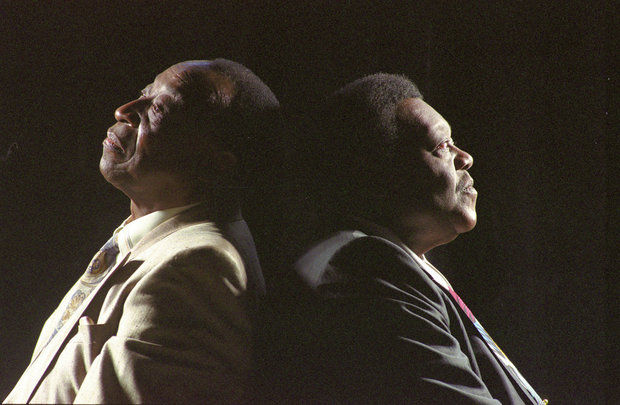
Lauro opened a Kickstarter online crowd-funding page for an upcoming documentary film, “The Big Beat: Fats Domino and His Band” which, he writes, will look at the essential musical partnership between Domino and his musical other half, the producer, arranger and trumpeter Dave Bartholomew.
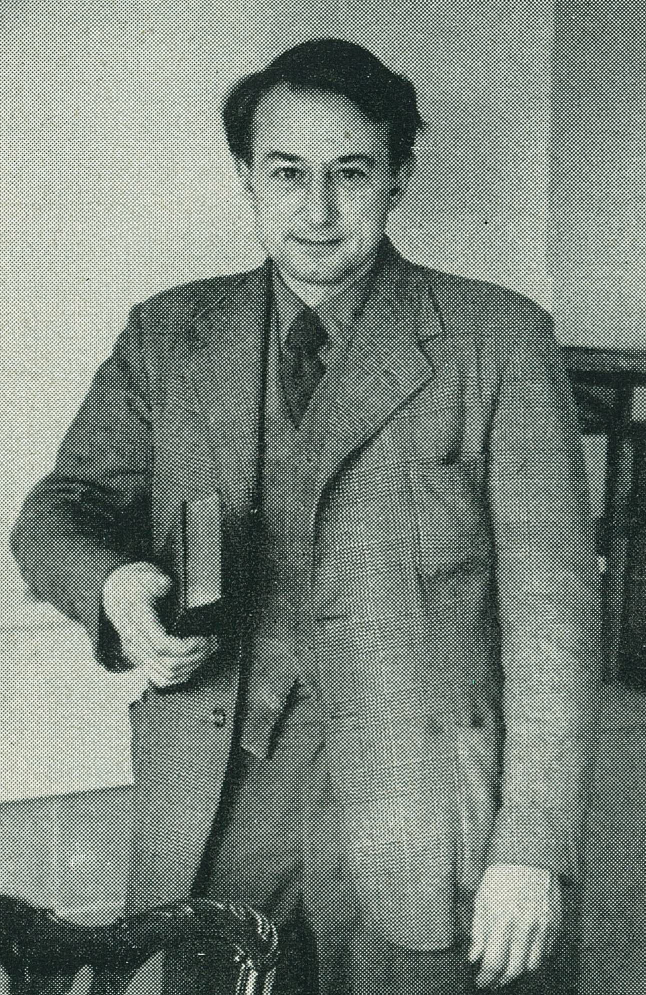
For years the name of AA Long was a reliable though unseen friend guiding me in much of my classics reading. One always had the sense of a profoundly engaged and reliable commentator especially regarding Hellenistic and Stoic literature which has been an abiding interest. It was a lovely surprise to come a cross this video of him: now I know what he looks and sounds like but most impressively, the amazing way he “performs,” echoing the tone in his writing, having such a broad and deep grasp of the material and being able to communicate difficult ideas. He is very much a scholar’s scholar, old school. I’m sure that there are other gems to be found on this resource which I’d not come across before: Philosophical Installations.

Yet another literary loss. Leonard was of course a NOLA boy. Leonard, like Toole, had a gift for rendering localized dialogue, one of the reasons his work translated quite well into film.
Albert Murray, author, critic and friend to Ralph Ellison and Duke Ellington, dead at 97
. . . foe of Marxists, Freudians, academics, black nationalists and white segregationists;
Like Ellison, he believed conflict was a given, that life was not a formula to be solved but a dance to be danced.
All those interested in extended mind/externalist/situated type thought should be aware of the field of Behavioral Economics (BE) in general and the work of Vernon Smith in particular. BE is a body of literature that was ploughing this trough some twenty years before the hypothesis of extended cognition took root in cognitive science. It is interesting to note that the Clark and Chalmers thesis took some inspiration from Herbert Simon (Clark & Chalmers, 1998). Simon writes:
Human beings, viewed as behaving systems, are quite simple. The apparent complexity of our behavior over time is largely a reflection of the complexity of the environment in which we find ourselves . . . [I] would like to view this information-packed memory less as part of the organism than as part of the environment to which it adapts . . . (Simon, 1996, 53, cf.8, 62, 99, 110).
But what is remarkable about this is that Simon in turn credits and endorses Hayek for this view:
No-one has characterized market mechanisms better than Friedrich von Hayek . . . [His] defense did not rest primarily upon the supposed optimum attained by them but rather upon the limits of the inner environment – the computational limits of human beings (Simon, 1996, 34).
What Simon has grasped is the corollary to Hayek’s spontaneous order externalism – “cognitive closure” (or in Simon’s terminology “bounded rationality” was a key presupposition to all Hayek’s work and set out in its most technical form in Hayek (1952/1976). Cognitive closure is the idea that the human mind is constitutionally delimited – a condition that can be ameliorated if the social and artifactual world functions as a kind of distributed extra-neural knowledge store.
Through the work of Vernon Smith (the provenance going back to his classical namesake, Adam), ecological or situated/bounded rationality has received its most recent and finest articulation. Unlike some Nobel Laureates (no names) Vernon is not a prima donna. He is exceedingly approachable, very kind, generous, modest and open-minded. I was lucky enough to meet Vernon in Tucson and he put me at ease very quickly as did his charming wife. Recently, Vernon gave me an inscribed copy of his Rationality in Economics: Constructivist and Ecological Forms along with his autobiography Discovery – A Memoir, the former deeply informing my work; the latter interest taking wing from my talking to him about his Kansas youth.

An alternative take on NOLA nosebag. Not the usual suspects . . . which is refreshing.