Steps to a “Properly Embodied” Cognitive Science
Here is a survey paper that I was “action editor” for. Artificial intelligenceCognitionCognitive neuroscienceCognitive scienceEmbodied cognitionMog StapletonPhilosophy of mindSocial Sciences

Here is a survey paper that I was “action editor” for. Artificial intelligenceCognitionCognitive neuroscienceCognitive scienceEmbodied cognitionMog StapletonPhilosophy of mindSocial Sciences

This is a highly unusual collection worth checking out, co-edited by the very excellent Dagfinn Føllesdal – for the first time here is a work that seriously brings Adam Smith into the orbit of cogsci: Contents Preface Introduction Contributors Can we have objective knowledge of the world? Can we understand what is morally right or wrong?…

Here is Thierry Aimar’s intro to his paper for Hayek in Mind. Contemporary analysis usually divides games of chance into three dimensions. In Machina and Schmeidler’s (1992) terms, this division can be viewed based on the example of an urn containing 90 balls of different colors, out of which an agent pulls a ball, of…

Programming the Global Brain Considering how we can improve our understanding and utilization of the emerging human-computer network constituting the global brain. (Here’s a previous post on this topic) Abraham Bernstein, Mark Klein, Thomas W. Malone New ways of combining networked humans and computers—whether they are called collective intelligence, social computing, or various other terms—are…

The intro from Jan Willem Lindemans’ paper: The philosophical foundations of Hayek’s works are not beyond dispute (Gray, 1984, Kukathas, 1989, Caldwell, 1992, Hutchison, 1992): was Hayek a rationalist or an empiricist; did he follow Kant or Hume, Mises or Popper? Difficulties arise because these questions touch upon social theory, political philosophy, methodology and epistemology.…
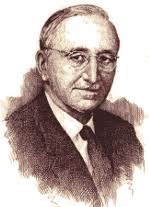
My chum Chor-yung Cheung who like myself is both an Oakeshottian and a Hayekian introduces his paper below: Friedrich Hayek’s social philosophy is one of the most systematic and sophisticated among the contributions made by 20th-century liberal thinkers. His defense of the free market and individual freedom and his critique of collectivism of various kinds are…

A pre-print of Paul Smart’s paper. CognitionCognitive scienceExtended MindMindPaul Smartphilosophical psychologyPhilosophy of mindShaun GallagherSocial Sciences

Just under a week until the CI2012 shindig – as it so happens I’m busy co-writing a paper and co-editing a themed issue of Cognitive Systems Research on a species of CI – surprise, surprise “stigmergy.” Artificial intelligenceAustrian SchoolCognitionCollective intelligencecomplexityExtended MindIntelligenceKnowledgeKnowledge ManagementPhilosophy of mindsocial epistemologySocial SciencesSpontaneous orderStigmergyWikipedia
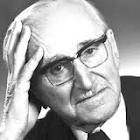
Gloria Zúñiga y Postigo’s intro from her excellent paper. Friedrich Hayek’s social theory is well known for his articulation of the paradigm of spontaneous orders that challenges the traditional distinction between what is natural and what is artificial. The problem that Hayek saw is that language and other social objects do not fall under either…

The new issue of EPISTEME, our first with CUP, is now available. Cambridge University PressCognitive scienceEPISTEMEEpistemologyKnowledgePhilosophy of mindsocial epistemologySocial SciencesStigmergy
 manwithoutqualities