Browse by:

Cognitive Opening and Closing: Toward an Exploration of the Mental World of Entrepreneurship

Here is Thierry Aimar’s intro to his paper for Hayek in Mind. Contemporary analysis usually divides games of chance into three dimensions. In Machina and Schmeidler’s (1992) terms, this division can be viewed based on the example of an urn containing 90 balls of different colors, out of which an agent pulls a ball, of…

Hayek’s Post-Positivist Empiricism: Experience Beyond Sensation

The intro from Jan Willem Lindemans’ paper: The philosophical foundations of Hayek’s works are not beyond dispute (Gray, 1984, Kukathas, 1989, Caldwell, 1992, Hutchison, 1992): was Hayek a rationalist or an empiricist; did he follow Kant or Hume, Mises or Popper? Difficulties arise because these questions touch upon social theory, political philosophy, methodology and epistemology.…

Beyond Complexity: Can The Sensory Order Defend the Liberal Self?

My chum Chor-yung Cheung who like myself is both an Oakeshottian and a Hayekian introduces his paper below: Friedrich Hayek’s social philosophy is one of the most systematic and sophisticated among the contributions made by 20th-century liberal thinkers. His defense of the free market and individual freedom and his critique of collectivism of various kinds are…

Rationalism in Politics

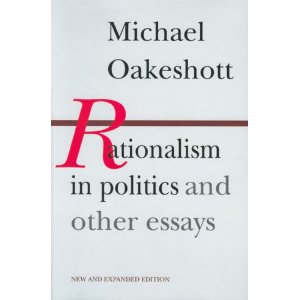
In anticipation of a talk I’m giving later on in the week on Oakeshott’s so-called “dispositional conservatism”, here is a nice little piece by my chum Gene Callahan serving as a good introduction to RIP. The British philosopher and historian Michael Oakeshott is a curious figure in twentieth-century intellectual history. He is known mostly as…

The Emergence of the Mind: Hayek’s Account of Mental Phenomena as a Product of Spontaneous Physical and Social Orders

Gloria Zúñiga y Postigo’s intro from her excellent paper. Friedrich Hayek’s social theory is well known for his articulation of the paradigm of spontaneous orders that challenges the traditional distinction between what is natural and what is artificial. The problem that Hayek saw is that language and other social objects do not fall under either…

Hayek’s Speculative Psychology, The Neuroscience of value Estimation, and the Basis of Normative Individualism

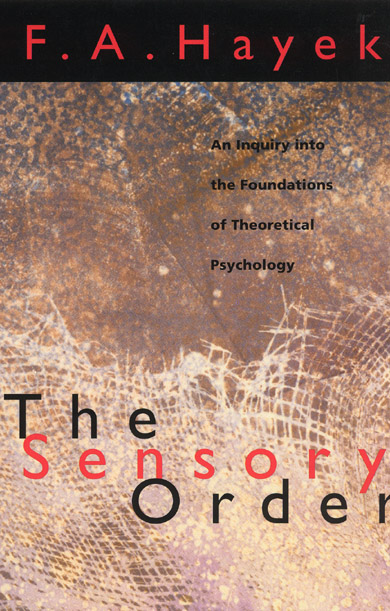
Here’s the opening paragraph of Don Ross’ paper from Hayek in Mind: Hayek’s Philosophical Psychology. Philosophers of mind who re-visit Friedrich Hayek’s The Sensory Order almost sixty years after its publication should feel humbled, perhaps sheepish, on behalf of their discipline. The book is essentially an exercise in abstract speculative mental architecture construction, the kind of…

Remembering Varela

Four articles (and more) of interest to theorists interested in enaction: 1. Tom Froese’s new article in Adaptive Behavior: Critics of the paradigm of enaction have long argued that enactive principles will be unable to account for the traditional domain of orthodox cognitive science, namely “higher-level” cognition and specifically human cognition. Moreover, even many of the…

A Disposition of Delight

My chum and the new president of the Michael Oakeshott Association, Elizabeth Corey, has just had this article published in First Things. Since this article is by subscription, I will only post a couple of extracts that caught my eye. Elizabeth is an excellent scholar whose chapter entitled “The Religious Sensibility of Michael Oakeshott” will be…

Hayek in Mind: Hayek’s Philosophical Psychology

The book was published today. Here is the publisher’s webpage and the Amazon page. CognitionCognitive sciencecomplexityFriedrich HayekHayekhebbphilosophical psychologyPhilosophy of mindPsychology