Browse by:

Hume and Wittgenstein

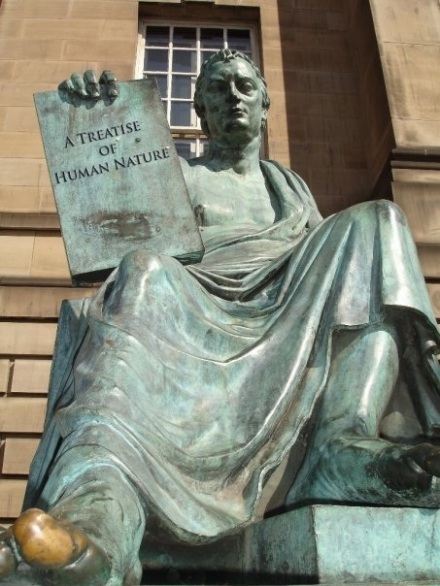
Born on this day Hume [O.S.] The most important philosopher ever to write in English, David Hume (1711-1776) — the last of the great triumvirate of “British empiricists” — was also well-known in his own time as an historian and essayist. A master stylist in any genre, Hume’s major philosophical works — A Treatise of Human…
EPISTEME: A NEW SELF-DEFINITION

With this issue Episteme makes its debut with Cambridge University Press, after eight successful years of publication at Edinburgh University Press. The journal’s new subtitle reflects a significant expansion in scope and mission. Our previous subtitle, ‘A Journal of Social Epistemology’, reflected our earlier focus on the nascent field of social epistemology. The new subtitle,…

Beyond Complexity: Can The Sensory Order Defend the Liberal Self?

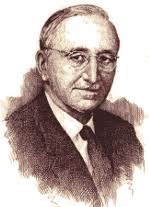
My chum Chor-yung Cheung who like myself is both an Oakeshottian and a Hayekian introduces his paper below: Friedrich Hayek’s social philosophy is one of the most systematic and sophisticated among the contributions made by 20th-century liberal thinkers. His defense of the free market and individual freedom and his critique of collectivism of various kinds are…

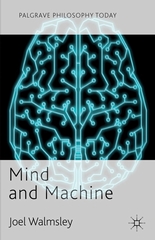
Mind and Machine

Look out for the this forthcoming book by Joel Walmsley. Joel co-wrote with the one and only Andre Kukla a terrific paper a few years back  for one of the early issues of EPISTEME. Alan TuringArtificial intelligenceChinese RoomCognitionCognitive neuroscienceCognitive scienceConnectionismEmbodied cognitionNatural LanguagePhilosophyPhilosophy of mindqualiaTuring test

Google as cognitive extension

“Google Effects on Memory: Cognitive Consequences of Having Information at Our Fingertips” in Science. The advent of the Internet, with sophisticated algorithmic search engines, has made accessing information as easy as lifting a finger. No longer do we have to make costly efforts to find the things we want. We can “Google” the old classmate,…

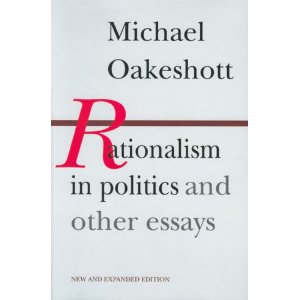
Rationalism in Politics

In anticipation of a talk I’m giving later on in the week on Oakeshott’s so-called “dispositional conservatism”, here is a nice little piece by my chum Gene Callahan serving as a good introduction to RIP. The British philosopher and historian Michael Oakeshott is a curious figure in twentieth-century intellectual history. He is known mostly as…