Browse by:

Google as cognitive extension

“Google Effects on Memory: Cognitive Consequences of Having Information at Our Fingertips” in Science. The advent of the Internet, with sophisticated algorithmic search engines, has made accessing information as easy as lifting a finger. No longer do we have to make costly efforts to find the things we want. We can “Google” the old classmate,…

Collective Intelligence 2012

Just under a week until the CI2012 shindig – as it so happens I’m busy co-writing a paper and co-editing a themed issue of Cognitive Systems Research on a species of CI – surprise, surprise “stigmergy.” Artificial intelligenceAustrian SchoolCognitionCollective intelligencecomplexityExtended MindIntelligenceKnowledgeKnowledge ManagementPhilosophy of mindsocial epistemologySocial SciencesSpontaneous orderStigmergyWikipedia

The Emergence of the Mind: Hayek’s Account of Mental Phenomena as a Product of Spontaneous Physical and Social Orders

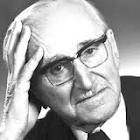
Gloria Zúñiga y Postigo’s intro from her excellent paper. Friedrich Hayek’s social theory is well known for his articulation of the paradigm of spontaneous orders that challenges the traditional distinction between what is natural and what is artificial. The problem that Hayek saw is that language and other social objects do not fall under either…

Kuhn’s Evolutionary Social Epistemology

Here’s a review of K. Brad Wray’s Kuhn’s Evolutionary Social Epistemology. (Wray, by the way, has been a strong contributor to EPISTEME). It’s also worth checking out Alexander Bird’s entry on Kuhn for Stanford Encyclopedia of Philosophy. Kuhn is one of those thinkers whose work has been tarnished by academics who need an off-the-peg philosophical outlook…

Hegel and the extended mind

Anthony Crisafi and Shaun Gallagher in AI & Society (Volume 25, Number 1, 123-129): We examine the theory of the extended mind, and especially the concept of the ‘‘parity principle’’ (Clark and Chalmers in Analysis 58.1:7–19, 1998), in light of Hegel’s notion of objective spirit. This unusual combination of theories raises the question of how…

Lockean Social Epistemology

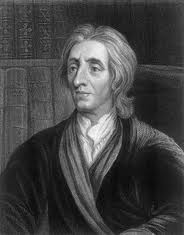
As mentioned in this paper, Locke and social epistemology is an improbable relation but  . . . Locke’s reputation as a sceptic regarding testimony, and the resultant mockery by epistemologists with social inclinations, is well known. C.A.J. Coady paints Locke as an extreme example of epistemological individualism; Frederick F. Schmitt argues that Locke regards testimony…