The brain is full of Manhattan-like grids
Article reporting a study in Discover Magazine BrainCognitionCognitive neuroscienceCognitive scienceDiffusion MRIHuman brainHuman Connectome ProjectMagnetic resonance imagingPhilosophy of mind
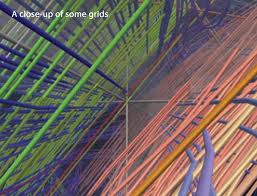
Article reporting a study in Discover Magazine BrainCognitionCognitive neuroscienceCognitive scienceDiffusion MRIHuman brainHuman Connectome ProjectMagnetic resonance imagingPhilosophy of mind

Here is a review of Shaun Gallagher’s door-stopper of a book – the publisher’s blurb and toc below. (I’ve just finished a paper for another collection that would have fitted in this collection since communitarian notions of identity seem to be missing). Research on the topic of self has increased significantly in recent years across a…

Here is the introduction to Ed Feser’s paper from Hayek in Mind. In late 1952, F. A. Hayek sent his friend Karl Popper a copy of his recently published book The Sensory Order: An Inquiry into the Foundations of Theoretical Psychology. In a letter dated December 2, 1952, Popper acknowledged receipt of the book and…

Anthony Crisafi and Shaun Gallagher in AI & Society (Volume 25, Number 1, 123-129): We examine the theory of the extended mind, and especially the concept of the ‘‘parity principle’’ (Clark and Chalmers in Analysis 58.1:7–19, 1998), in light of Hegel’s notion of objective spirit. This unusual combination of theories raises the question of how…

I chanced upon this painting entitled “Cosmos and Taxis“. The inspiration is, of course, as the artist states: One effect of our habitually identifying order with a made order or taxis is indeed that we tend to ascribe to all order certain properties which deliberate arrangements regularly, and with respect to some of these properties…

Colin McGinn responds to comments on his article of a few days ago in the NYT. Colin McGinnDaniel DennettPhilosophyPhilosophy of mindThe New York Times

Check out the recently completed online conference. Bravo to Richard Brown for this great initiative. Also check out the forthcoming issue of Consciousness and Cognition that features papers from CO2. CognitionconsciousnessConsciousness and CognitionPhilosophyPhilosophy of mind
Here’s the opening paragraph of Don Ross’ paper from Hayek in Mind: Hayek’s Philosophical Psychology. Philosophers of mind who re-visit Friedrich Hayek’s The Sensory Order almost sixty years after its publication should feel humbled, perhaps sheepish, on behalf of their discipline. The book is essentially an exercise in abstract speculative mental architecture construction, the kind of…
Check out the latest issue of the Journal of Consciousness Studies, a themed issue built around Dave Chalmers’ 2010 JCS paper “The Singularity“. What happens when machines become more intelligent than humans? One view is that this event will be followed by an explosion to ever-greater levels of intelligence, as each generation of machines creates…

Part of the Guardian’s Hard Problem series. BrainCognitionCognitive neuroscienceCognitive scienceneurosciencePhilosophy of mindqualia
 manwithoutqualities