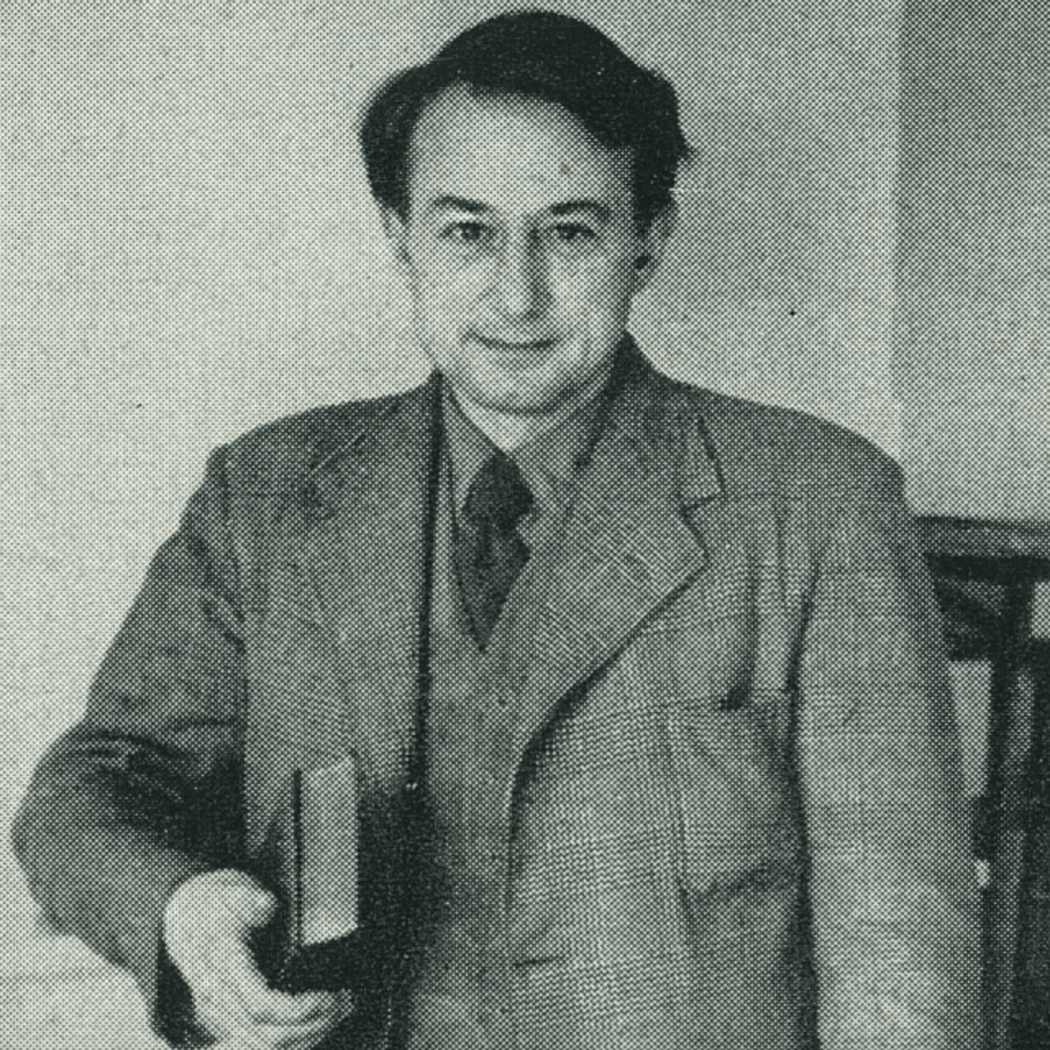
Recently I’ve had several requests for this recording which has been buried under umpteen other posts since it was first posted some thirteen years ago. The University Programme: Arts – Philosophy of History by Michael J. Oakeshott. Originally broadcast by the BBC 13.1.48 (13 minutes).
Transcript
There will always be some subjects of study which, in spite of their interest and importance, do not appear in the normal undergraduate curriculum of a university. Sometimes this is merely a matter of convention and tradition, and differs from one university to another and from one country to another. But often, it is because the subject is thought to be inherently unsuitable for undergraduate study. And so far as the universities of Great Britain are concerned, this is certainly true of the philosophy of history. I doubt if this subject is to be found in the undergraduate curriculum, either in history or philosophy, in any British university. This, however, doesn’t mean that the subject is not studied in British universities; it means only, that it is not normally prescribed for undergraduate study. And I think there are two reasons for believing it to be a sound tradition, which reserves this, and certain other subjects, for postgraduate inquiry. The philosophy of history, in any of the forms in which it has appeared in European thought, pre-eminently called for a long and varied preparation, if it is to be pursued profitably. And further, the form which it now commonly takes, is a study whose achievements are still so small and so tentative, that for some time to come, it will lack the body and relative stability which would make it an appropriate part of an undergraduate education.
Since Voltaire in the 18th Century invented the name, ‘philosophy of history’, it has, in general, stood for three different studies, each of which is pursued by scholars today although it is not now customary to speak of them all as the philosophy of history. Two indeed, have almost ceased to be called by that name and have left the third in undisputed possession of the title. Nevertheless, even the briefest review of the place of the philosophy of history in British universities, must recognize the three different studies which for many years, shared the name.
The first of these, is the study of the course of past events in an attempt to detect some general principle or principles, which would make the whole thing hang together. Formerly, such a principle was found in the idea of God as the source of all that happens. But the disappearance of providence from the vocabulary of the historian, has opened the gate to a new field of speculation and research: many different principles and different kinds of principle have been suggested to take its place. Some writers, have thought of these principles, as laws of historical change, not unlike the laws which scientists have observed in operation in the natural world. While others, have considered them rather, as general, abstract ideas, appearing in different forms, at different periods of world history, and giving a general meaning to the whole course of events. Hegel, for example, found the unifying thread of history in the idea of freedom. This enterprise, of discovering a pattern or plan in the course of world events, has already inspired many great works of scholarship and imagination, and it is safe to say, will in the future, inspire many more. But it is an exacting pursuit and perhaps not once in a generation will a contribution of first-rate importance be made to it. And it’s easy to see that it is better to call this study, simply history, rather than the philosophy of history, because the works it inspires differ from other historical works only in the largeness of their scale. Consequently, it doesn’t surprise us that the latest of these attempts is called by its author, Professor Arnold Toynbee, a study of history. And so far as English scholarship is concerned, this is the one great work of our time in this field. It would, then, be absurd to expect the qualities required for such a study to be widely spread in the universities of any country. But most British universities offer some opportunity for work of this kind.
The second pursuit, which has gone by the name of the philosophy of history, is the study of an altogether different sort. It is concerned, not primarily with the course of events itself, but with the problems and methods of historical research, with what may be called methodology. This study was first set on foot by French scholars in the seventeenth century and, by now, has great achievements to its credit. In the schools of history in most British universities professors will be found interested in this subject, and it is a subject to which English scholars, have made great contributions. But, on the whole, it must be admitted that it has been developed more systematically on the Continent, in France and in Germany, then in England, where its vitality has usually depended upon an outstanding personality, rather than upon a continuous tradition of inquiry and teaching. The Institute of Historical Research in London is perhaps the nearest thing we have to a centre for this kind of study. But it is a study, which with a clearer perception of its real nature, has now ceased to be thought of as the philosophy of history, and has been recognised as a specialized study of historical method, or, as it is now sometimes called, historiography.
The third enterprise, the study which still retains its hold on the name ‘philosophy of history’, differs radically from both the other two. For it, history, doesn’t stand for the course of events, but for a certain sort of inquiry, a certain sort of knowledge. And for it also, what is interesting, is not the methodology of the inquiry, but the validity of its results. The problem it sets out to elucidate are the nature and presuppositions of this inquiry called history. And the aim of the study, is to reach some conclusions about the nature of historical truth and the validity of historical knowledge. Now you can see at once, that anybody who embarks upon this enterprise, requires to have at his disposal, as part of the materials of his study, a considerable body of historical writing. If a man is to discuss the validity of a certain form of inquiry, he needs to be supplied with some examples of it. And since it is only in the last hundred and fifty years or so that historians have gone about their business in a critical manner, its understandable, that the philosophical study of historical knowledge has had to wait until comparatively recent years for the inspiration, and opportunity to make a beginning. Hence the relative smallness of its achievement compared, for example, the achievement of a similar study of the nature and validity of scientific knowledge. Indeed, much of the character of this philosophy of history, has, so far, been determined by the unavoidable lateness of its appearance. For example, at the time when philosophers were beginning to consider the nature of historical inquiry, the prestige of scientific inquiry was already enormous. And it seemed clear that the most satisfactory way of demonstrating the validity of historical knowledge was by showing it to be only a form of scientific knowledge, different perhaps in subject matter, but identical in object and method. This was a mistake. But it was sometime before the present more profitable inquiry into the differences between scientific and historical knowledge was begun. However, it’s now long since this kind of philosophy of history has found its place in the world of scholarship and has begun to explore its appropriate field of inquiry. Naturally, this kind of philosophy of history will flourish only where the study of history and the study of philosophy go on side by side. For, although it is no part of the function of this philosophy of history to give directions to the historian about how he shall think and write, the relations between the two is reciprocal. The philosopher in this inquiry uses the work of historians as at least part of his material. And the historian, in his inquiry, may perhaps benefit from the philosophical criticism of his some more general ideas – ideas such as cause and effect growth and decay, development, change, progress, success and failure. These conditions, history and philosophy studied side by side, exist and have long existed in every British university. But though the potentiality of the study of the philosophy of history is nowhere absent in England it has, not unnaturally, been most fully realized in the university where the study of philosophy and the study of history have long been traditionally allied, that is, in Oxford. Nevertheless it required also some external stimulus to turn the minds of English scholars in this direction, a stimulus which came first from Germany, and later from Italy. But, it may be said, that since about 1870, this kind of philosophy of history is a study, to which English scholars have made a notable contribution and that Oxford scholars have played a leading part in it beginning with FH Bradley. In no subject does English scholarship run easily in the harness of a school of thought. Great investigators are apt to reveal their greatness more in the impetus than in the precise direction they give to a study. And if they found a school, it’s more likely to be a school of inquiry than a school of thought. This is certainly true of the philosophy of history. It has felt the impress of strong characters such as the late Professor RG Collingwood, but neither he nor anyone else has confined English thought in this subject to a particular direction or established the pre-eminence of a particular doctrine. Indeed, this is a study in which at the present time in England there is a strong tradition and a growing opportunity of inquiry with little or nothing to restrict the direction in which it may run.

