Earlier this year I brought your attention to a movie that its producers are trying to bring to fruition. Here is a preview that they have just alerted me to – its not obvious how the notion of qualia fits in – but it’s early days.
Cognitive Science Research: Extended Mind Themed Issue
Here is my introduction to the themed issue of Cognitive Systems Research. The full collection is now available here.
Robotic Teaching
A video about robot teachers from The New York Times.
Extended Mind (Yet Again)
The articles comprising the themed issue of Cognitive Systems Research are now available from the publisher’s Articles in Press page.
Note from Elsevier:
The section “Articles in Press” contains peer reviewed accepted articles to be published in this journal. When the final article is assigned to an issue of the journal, the “Article in Press” version will be removed from this section and will appear in the associated published journal issue. The date it was first made available online will be carried over. Please be aware that although “Articles in Press” do not have all bibliographic details available yet, they can already be cited using the year of online availability and the DOI as follows: Author(s), Article Title, Journal (Year), DOI.
Please consult the journal’s reference style for the exact appearance of these elements, abbreviation of journal names and the use of punctuation.
There are three types of “Articles in Press”:
Accepted manuscripts: these are articles that have been peer reviewed and accepted for publication by the Editorial Board. The articles have not yet been copy edited and/or formatted in the journal house style.
Uncorrected proofs: these are copy edited and formatted articles that are not yet finalized and that will be corrected by the authors. Therefore the text could change before final publication.
Corrected proofs: these are articles containing the authors’ corrections and may, or may not yet have specific issue and page numbers assigned.
Cognitive Systems and the Extended Mind
Here’s a draft of a review by Andreas Elpidorou to appear in Minds and Machines of Rob Rupert’s Cognitive Systems and the Extended Mind.
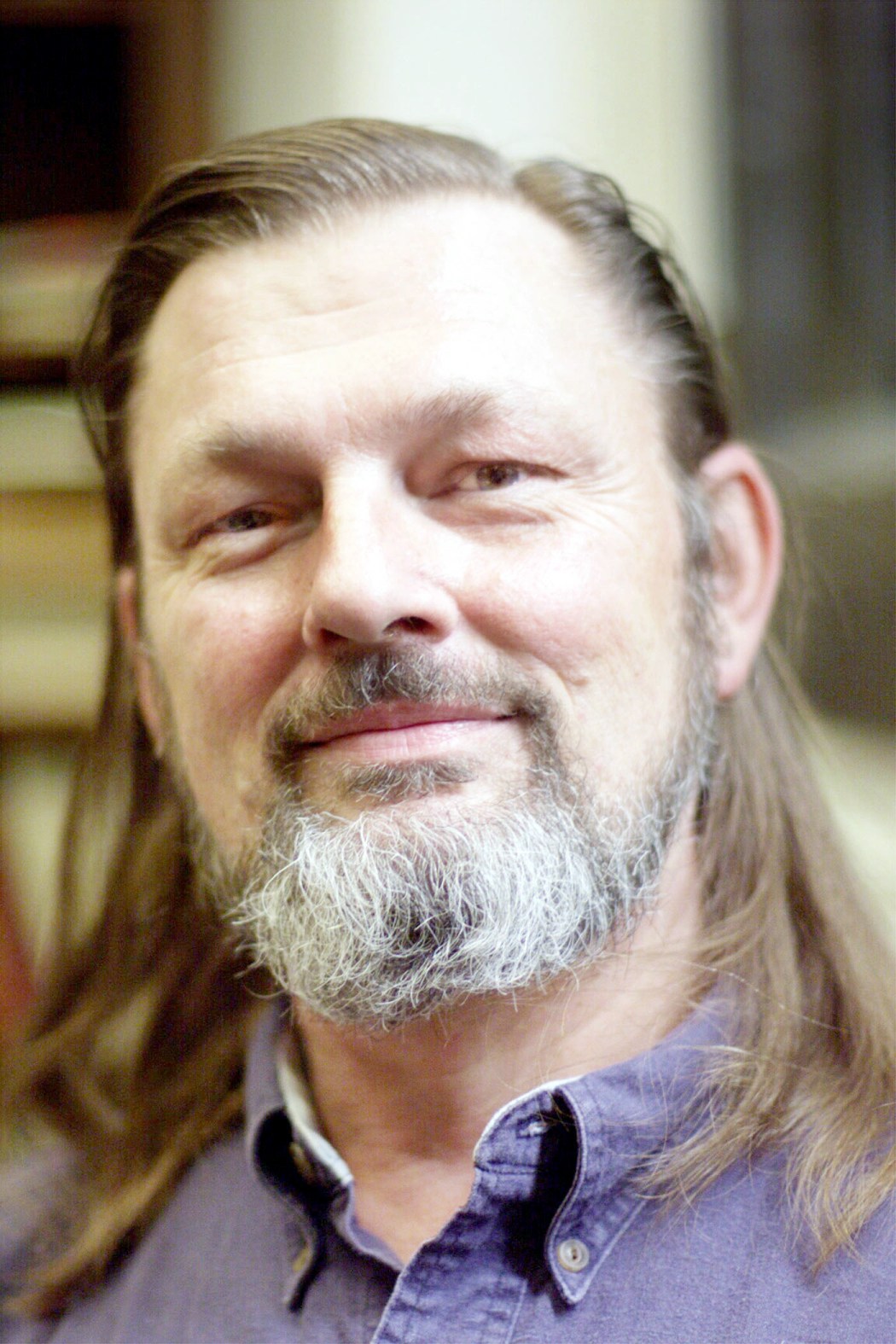
John Haugeland
As most will already know, John Haugeland passed away this week.
“Extended Mind” in Key Terms
Over at Brain Hammer Peter Mandik has posted his entry on Extended Mind from his Key Terms in Philosophy of Mind.
Conscious machines
Here’s an article in The Philosopher’s Magazine by Igor Aleksander, one of 50 big issues selected to commemorate the 50th issue of TPM.
Anthony (Lord) Quinton
I was sorry to learn of the death of Tony (Lord) Quinton.
My first contact with him was in the late-80s. Geoff Thomas, my Birkbeck tutor (who himself had Quinton as an examiner at Oxford), wrote to Quinton asking if he’d care to grant a young student an hour to chat about Oakeshott. Within the week, Quinton called me directly to set up a lunch-time meeting at the House of Lords. He very kindly showed me around and treated to me to a lovely lunch. We then settled in to discuss Oakeshott (I was canvassing interest in getting research supervision). Tony as he insisted I call him, was a superb raconteur and before long the formality of my stated intentions dissolved. We talked much about Oakeshott but also about Iris Murdoch, Gilbert Ryle and Wittgenstein. Three hours later I bid my farewell. On leaving he gave me a book from his private library (Baruch Brody’s Identity and Essence), an incredibly thoughtful gesture since he’d obvious consulted with Geoff as to what my other philosophical interests were. Not only that, he gave me a House of Lords pen set.
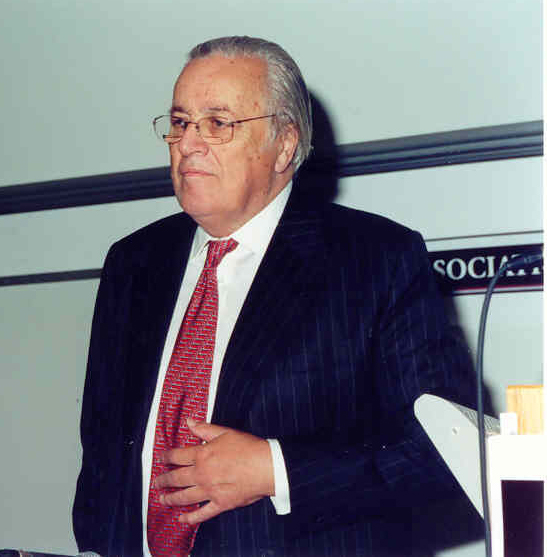
My next encounter with Tony was in the setting up of the Oakeshott Association. Without any hesitation he allowed me to trade on his name to gather the major Oakeshott players together to form this association. Of course this worked a charm. And when inquiries started to come through about when the Oakeshott conference would be (what conference???) once again I asked him if, subject to securing the funding, he would be the plenary speaker. Yet again, without pressing me on any detail whatsoever said that I should just let him know the date and he’ll be there. True to his word, at 9am precisely the dashing and dapper Tony Quinton stepped out of a taxi outside the Hong Kong Theatre in the Aldwych and Tony breezed in. Unusually for Tony (so I’m told) he hung around for the reception. Below are two photographs from the MOA reception.
At that time I was also in the process of setting up a new philosophy journal EPISTEME. Again, I turned to Tony asking if I could trade on his name to get this project going. As usual, he agreed with “no if or buts” expressed. Social epistemology was something he was always interested in but was not known as such in the analytical tradition. Having secured a publisher I decided that an annual conference would be in order to promote the journal and also provide a forum for this growing field. But where to hold such an event with little or no funding? Being a member of the British Academy Tony suggested that we book a room in his name and of course secure a members discount. This was duly done and again I was presumptuous enough to ask him if he’d be the first speaker. Of course, he agreed. In the interim I was Los Angeles-based and was communicating with Tony via snail mail and fax to get his talk knocked into shape for the first issue of EPISTEME. Tony didn’t do email and the typewritten script replete with “Tippexed” out typos and handwritten markup became quite a challenge to decipher.
Over the years I saw him at a couple of RIP lectures. Perhaps Tony’s real talent was as an expositor. He had the incredible ability to synthesis vast and difficult works and present them in a wonderfully lucid way. Tony never passed this ability off as being anything more than exposition – unlike some (who shall remain nameless), he was not one to immerse himself in a topic for six weeks, crank out a book, thereby setting himself up as an expert in yet another field. I thought Tony’s magnum opus The Nature of Things (1973) to be choppy (see Michael Ayers’ review in Philosophy 49, 1974, pp. 401-413) and its subject matter was bound to upset many of his political allies. His The Politics of Imperfection: The Religious and Secular Traditions of Conservative Thought in England from Hooker to Oakeshott (1978) finds Quinton at his very best.
I am terribly grateful for the kindness and generosity of spirit he accorded me – a true gentleman if ever there was one.
Telegraph obituary
Guardian obituary
Independent obituary
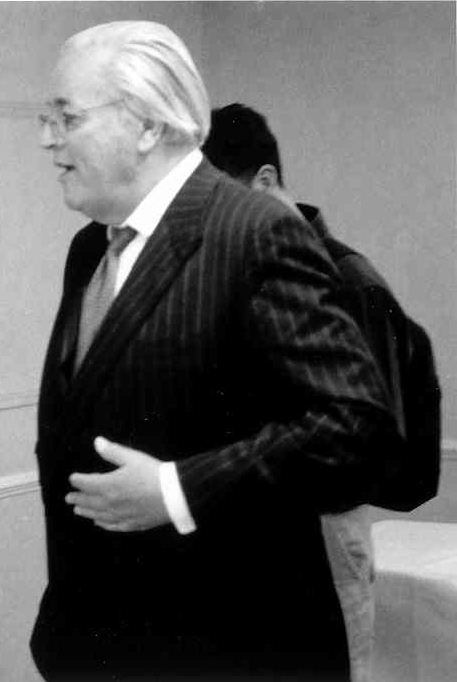
Tony at the first MOA conference, September 2001