Walker Percy Wednesday – 8

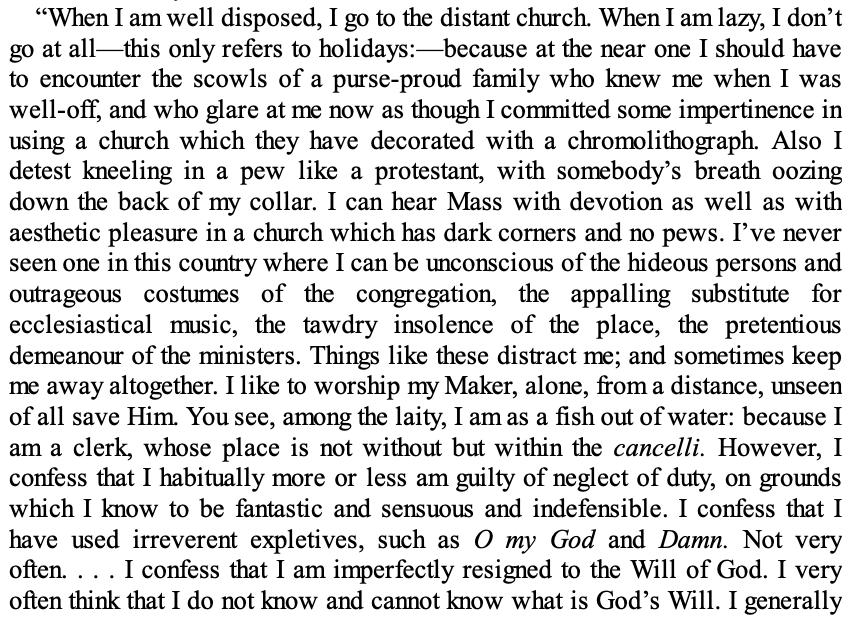
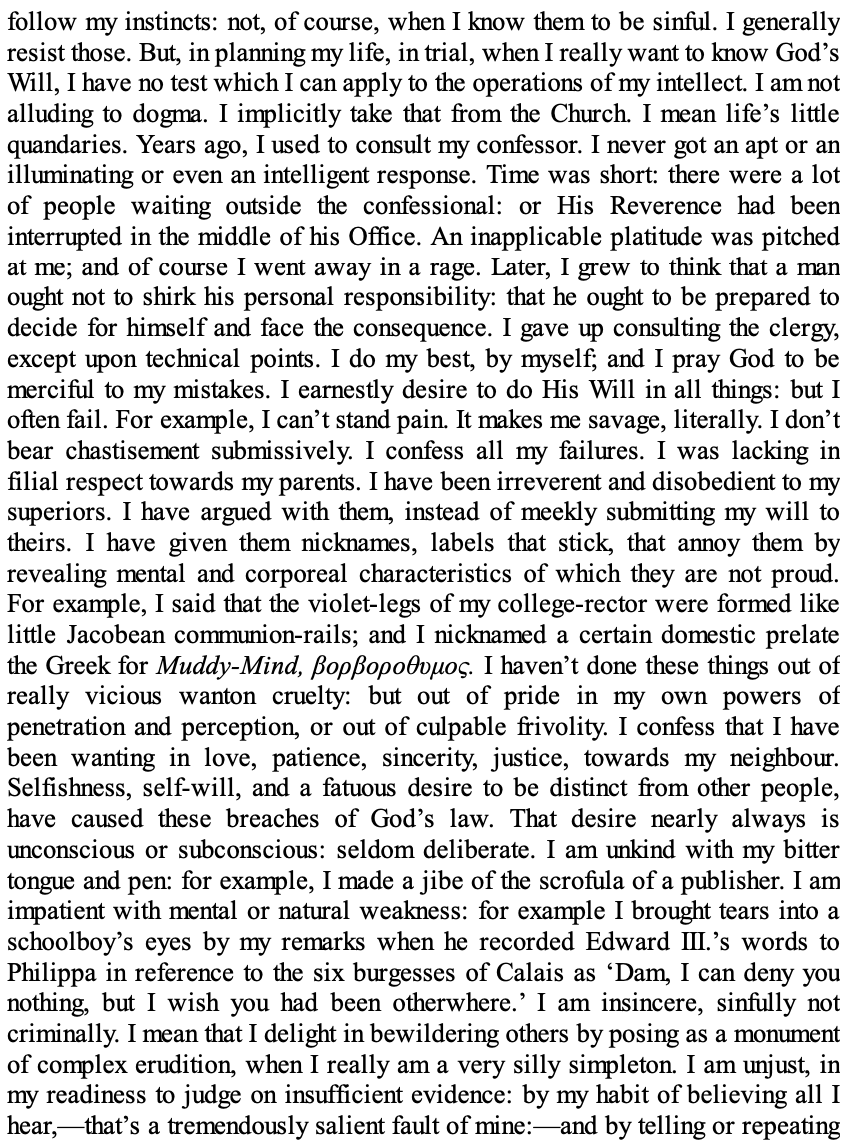
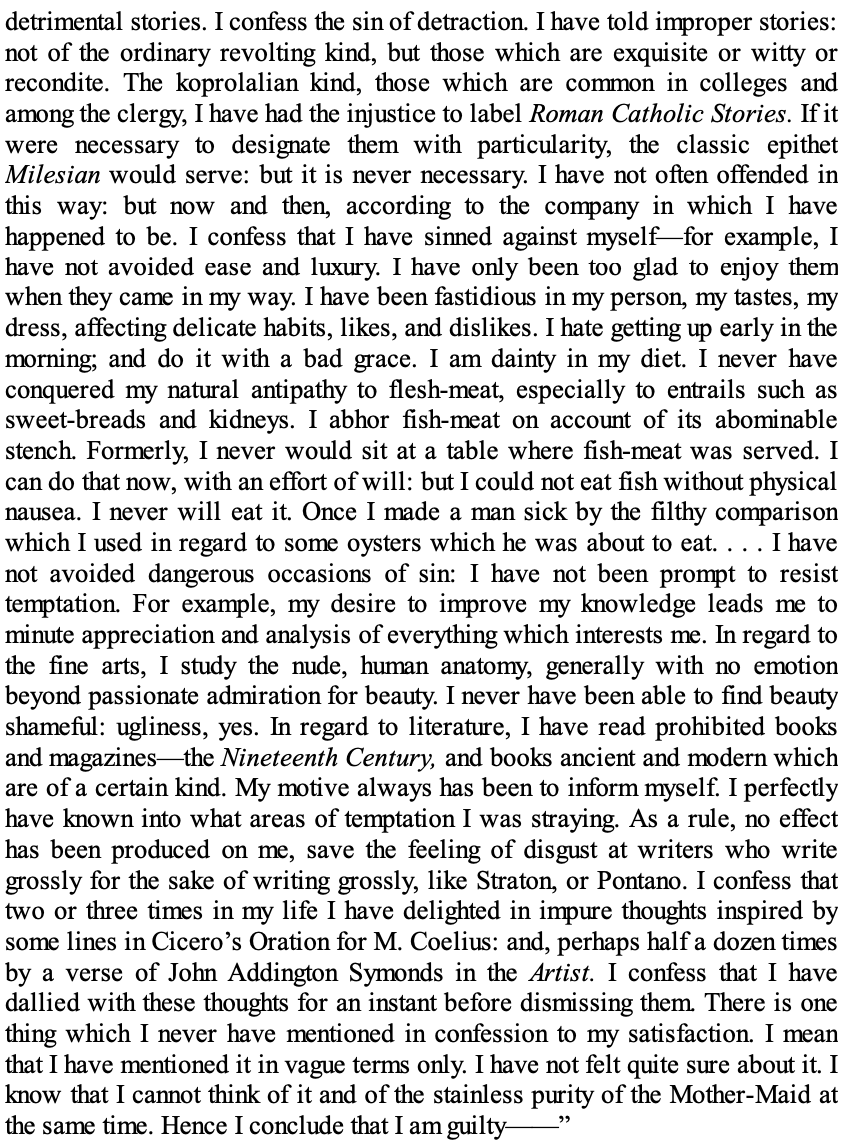
Being of both a scientific and a superstitious turn of mind and therefore always on the lookout for chance happenings which lead to great discoveries, he had to have a last look—much as a man will open a telephone book and read the name at his thumb . . . It did not take him long to act. Often nowadays people do not know what to do and so live out their lives as if they were waiting for some sign or other. This young man was such a person. If a total stranger had stopped him this morning on Columbus Circle and thrust into his palm a note which read: Meet me on the NE corner of Lindell Blvd and Kings Highway in St. Louis 9 A.M.next Thursday—have news of utmost importance, he’d have struck out for St. Louis (the question is, how many people nowadays would not?) . . . The high tide of life comes maybe in the last year of high school or the first year of college. Then life seems as elegant as algebra. Afterwards people ask, what happened to so and so? And the answer is a shrug. He was the sort who goes away . . . Even now he made the highest possible scores on psychological aptitude tests, especially in the area of problem-solving and goal-seeking. The trouble was he couldn’t think what to do between tests.

Walker Percy, Philosopher

A Confederacy of Dunces: extracts (47)

She described to Ignatius the courage of Patrolman Mancuso, who against heavy odds, was fighting to retain his job, who wanted to work, who was making the best of his torture and exile in the bathroom at the bus station. Patrolman Mancuso’s situation reminded Ignatius of the situation of Boethius, when he was imprisoned by the emperor before being killed. To pacify his mother and to improve conditions at home, he had given her The Consolation of Philosophy, an English translation of the work that Boethius had written while unjustly imprisoned and had told her to give it to Patrolman Mancuso so that he might peruse it while seated in his booth. “The book teaches us to accept that which we cannot change. It describes the plight of a just man in an unjust society. It is the very basis for medieval thought. No doubt it will aid your patrolman during his moments of crisis,” Ignatius had said benevolently.

screen-shot-2019-10-13-at-12.12.35-pm

Walker Percy Wednesday – 7

As for my search, I have not the inclination to say much on the subject. For one thing, I have not the authority, as the great Danish philosopher declared, to speak of such matters in any way other than the edifying. For another thing, it is not open to me even to be edifying, since the time is later than his, much too late to edify or do much of anything except plant a foot in the right place as the opportunity presents itself—if indeed asskicking is properly distinguished from edification.

Further: I am a member of my mother’s family after all and so naturally shy away from the subject of religion (a peculiar word this in the first place, religion; it is something to be suspicious of).

Walker Percy, Philosopher

Walker Percy Wednesday – 6

Now in the thirty-first year of my dark pilgrimage on this earth and knowing less than I ever knew before, having learned only to recognize merde when I see it, having inherited no more from my father than a good nose for merde, for every species of shit that flies—my only talent—smelling merde from every quarter, living in fact in the very century of merde, the great shithouse of scientific humanism where needs are satisfied, everyone becomes an anyone, a warm and creative person, and prospers like a dung beetle, and one hundred percent of people are humanists and ninety-eight percent believe in God, and men are dead, dead, dead; and the malaise has settled like a fall-out and what people really fear is not that the bomb will fall but that the bomb will not fall—on this my thirtieth birthday, I know nothing and there is nothing to do but fall prey to desire . . . Nothing remains but desire, and desire comes howling down Elysian Fields like a mistral. My search has been abandoned; it is no match for my aunt, her rightness and her despair, her despairing of me and her despairing of me and her despairing of herself. Whenever I take leave of my aunt after one of her serious talks, I have to find a girl.

Walker Percy, Philosopher

Stigmergy meets Jane Jacobs

The bringing of these two literatures together is long overdue. The British Journal of Criminology, Volume 61, Issue 2, March 2021, Pages 414–433: “Bringing the ‘many eyes’ theory of swarm intelligence into conversation with Jacobs (1961) notion of ‘eyes on the street’, we examine the impact social and mobile media may have on community crime prevention initiatives, given their influence on the nature, reach and speed of information diffusion among members of community groups. While, on the one hand, social and mobile media enable many ‘eyes on the street’ to meet on the screen, this can generate hyperconsciousness of crime that is conducive to ‘suspicion creep’—a widening of the parameters of suspicion among members of a group. As we detail in the final findings section on stigmergy, this suspicion creep is amplified by a reliance on first-order crime prevention measures: activities that primarily aim to reduce crime. When self-organized through stigmergic systems, direct crime prevention activities, such as neighbourhood patrols, have a tendency toward positive feedback, for they lack feasible negative feedback mechanisms. This issue is less likely to affect second-order crime prevention measures: activities that prevent crime as an indirect by-product of pursuing other social aims. Such crime prevention initiatives have greater scope to be stigmergic but not stigmatic—i.e. to enjoy the benefits of stigmergic self-organization without increasing exclusionary and hypervigilant sentiments”.

A Confederacy of Dunces: extracts (45)

“Go dangle your withered parts over the toilet!” Ignatius screamed savagely.

“Oh, shut up your little pussymouth, you mongoloid.”

“A little job in a office and you can’t hold it down. With all your education.”

“I was hated and resented,” Ignatius said, casting a hurt expression at the brown walls of the kitchen. He pulled his tongue from the mouth of the bottle with a thump and belched some Dr. Nut. “Ultimately it was all Myrna Minkoff’s fault. You know how she makes trouble.”

“Myrna Minkoff? Don’t gimme that foolishness, Ignatius. That girl’s in New York. I know you, boy. You must really pulled some boo-boos at that Levy Pants.”

“My excellence confused them.”

“Gimme that paper, Ignatius. We gonna take a look at them want ads.”

“Is that true?” Ignatius thundered. “Am I going to be thrown out again into the abyss? Apparently you have bowled all the charity out of your soul. I must have at least a week in bed, with service, before I shall again be whole.”

“Are you really going to attempt to read aloud? I doubt whether my system could bear that trauma at the moment. Anyway, I am looking at a very interesting article in the science column about mollusks.”

Mrs. Reilly snatched the paper from her son, leaving two little scraps of it in his hands.

“Mother! Is this offensive display of ill manners one of the results of your association with those bowling Sicilians?” 

screen-shot-2019-10-13-at-12.12.35-pm

Anatomy of Liberty in Don Quijote de la Mancha: Religion, Feminism, Slavery, Politics, and Economics in the First Modern Novel

Published today. Stay tuned for a C+T symposium on the book.