The Peripheral Mind
According to the author a new book can be expected. In this ever crowded genre I do like the title. Embodied cognitionExtended MindMindPeripheral nervous systemPhilosophyPhilosophy of mindShaun Gallagher

According to the author a new book can be expected. In this ever crowded genre I do like the title. Embodied cognitionExtended MindMindPeripheral nervous systemPhilosophyPhilosophy of mindShaun Gallagher

Two papers of note from the special issue “The Body Represented/Embodied Representation” of Review of Philosophy and Psychology and one from the current issue: A Moderate Approach to Embodied Cognitive Science – Alvin Goldman Embodying the Mind and Representing the Body – Adrian John Tetteh Alsmith and Frédérique de Vignemont In Defense of Phenomenological Approaches to Social Cognition:…
This from PCS ClarkCognitionCognitive neuroscienceCognitive sciencecomplexityconsciousnessConsciousness StudiesDavid ChalmersExtended MindFunctional magnetic resonance imagingPhilosophyPhilosophy of mind

Here’s plug for a collection of EM papers from about three years ago The Extended Mind by Mark Rowlands Abstract & Keywords Persons and the Extended-Mind Thesis by Lynne Rudder Baker Abstract & Keywords Minds, Intrinsic Properties, and Madhyamaka Buddhism by Teed Rockwell Abstract & Keywords Empathy and the Extended Mind by Joel W. Krueger Abstract & Keywords Quintuple…

Here’s a recent paper. Artificial intelligenceCognitionCognitive sciencePierre-Paul GrasséSpontaneous orderStigmergyWeb 2.0Web Design and DevelopmentWorld Wide Web
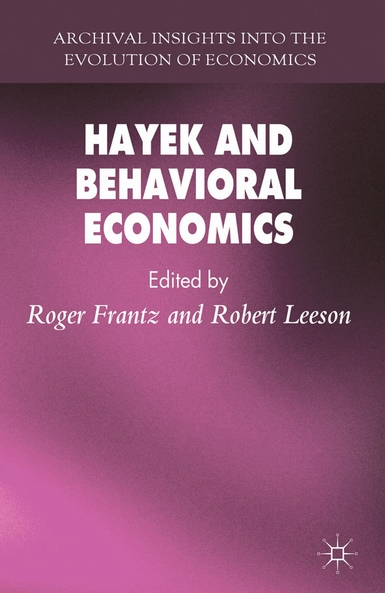
I see that the publisher now has a fully detailed page up for a volume that I’ve been privileged to be a part of. The Foreword is by a very nice chappie going by the name of V.Smith and includes luminaries such as McCloskey, Boettke, Gintis, Steel and others. My abstract: Mindscapes and Landscapes: Hayek and Simon on Cognitive Extension Hayek’s…

Yet another improbable invocation of EM. Andy ClarkClarkCognitionEmbodied cognitionExtended MindSocial Sciences

The last, but by no means least, paper from the CSR EM issue. Check out Mirko Farina’s review of Nivedita’s co-edited book Perception, Action, and Consciousness: Sensorimotor Dyamics and two Visual Systems. CognitionCognitive scienceEmbodied cognitionPerceptionPsychological ScienceSocial Sciences
This from the European Journal of Philosophy. Unfortunately, the citation – Fisher, J. (2009), ‘Critical Notice of The Bounds of Cognition’, Journal of Mind and Brain, 29: 345–57. should be: Fisher, J. (2008). ‘Critical Notice for The Bounds of Cognition’, Journal of Mind and Behavior, 29: 345-357. Andy ClarkCognitionCognitive neuroscienceCognitive scienceconsciousnessEmbodied cognitionExtended Mindphilosophical psychologyPhilosophy of mind

Marge and my intro now available as an uncorrected proof. Stay tuned for the rest of the papers comprising this special issue. According to Andy Clark “[M]uch of what goes on in the complex world of humans, may thus, somewhat surprisingly, be understood in terms of so-called stigmergic algorithms” (Clark, 1996, p. 279; 1997, p. 186).…
 manwithoutqualities