Thinking Music
Here’s an experiment (I’m assuming it’s legit) brought to my attention by the blog Artificialites.
Here’s an experiment (I’m assuming it’s legit) brought to my attention by the blog Artificialites.
Here’s an article by Elizabeth Radcliffe from TPM on Hume: He makes the astounding declaration that “Reason is, and ought only to be the slave of the passions, and can never pretend to any other office than to serve and obey them.”
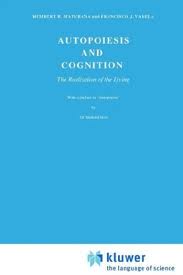
Maturana and Varela’s classic Autopoiesis and Cognition is freely available here (H/T to Paul Loader). What makes a living system a living system? What kind of biological phenomenon is the phenomenon of cognition? These two questions have been frequently considered, but, in this volume, the authors consider them as concrete biological questions. Their analysis is bold and…
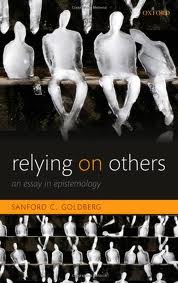
Here is an excellent website I’ve come across called New Books in Philosophy. One of the people behind this enterprise is Robert Talisse whose work I know from two articles in EPISTEME. Robert interviews Sandy Goldberg about his new book. Here’s an hour long audio discussion.
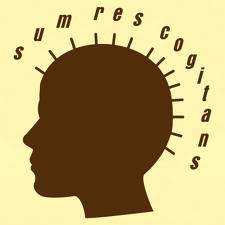
Here’s a paper I chanced upon. The full title: “The Four-Color Theorem Solved, Again: Extending the Extended Mind to the Philosophy of Mathematics” (I’ve just noticed that Ken Aizawa has already beat me to the punch!).
David Colman – a great loss. A favourite message turned on the belief that science moves forward most significantly and dramatically as a result of “undirected, non-targeted, curiosity-driven research.” McGill obituary Globe & Mail obituary

Today marks the first anniversary of the death of my chum Rob Haskell. Here is an obituary I posted earlier this year and a briefer one published on the UNE website. Raised along the mid-Maine coast he loved, he combined in his own personality the rugged solitude, beauty, and magnetism of that state: he was first…
Here is a survey paper that I was action editor for.
Here are two articles from Science: “Searching for the Google Effect on People’s Memory“ “Google Effects on Memory: Cognitive Consequences of Having Information at Our Fingertips“ Betsy Sparrow is interviewed here. GoogleWeb search engine
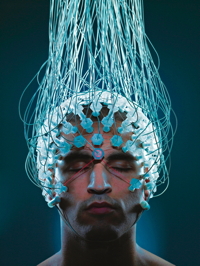
Here’s an article in The Atlantic. Neuroscience is beginning to touch on questions that were once only in the domain of philosophers and psychologists, questions about how people make decisions and the degree to which those decisions are truly “free.” These are not idle questions. Ultimately, they will shape the future of legal theory and…

