Browse by:

Mind and Machine

Look out for the this forthcoming book by Joel Walmsley. Joel co-wrote with the one and only Andre Kukla a terrific paper a few years back  for one of the early issues of EPISTEME. Alan TuringArtificial intelligenceChinese RoomCognitionCognitive neuroscienceCognitive scienceConnectionismEmbodied cognitionNatural LanguagePhilosophyPhilosophy of mindqualiaTuring test


Google as cognitive extension

“Google Effects on Memory: Cognitive Consequences of Having Information at Our Fingertips” in Science. The advent of the Internet, with sophisticated algorithmic search engines, has made accessing information as easy as lifting a finger. No longer do we have to make costly efforts to find the things we want. We can “Google” the old classmate,…

Turing Test

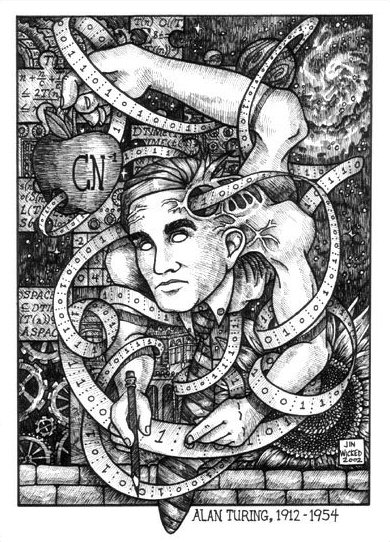
Another of probably several Turing related posts in the run up to the summer commemorations of Turing’s birth and death (23 June 1912 – 7 June 1954) – the following from Science Magazine 13 April 2012: Vol. 336 no. 6078. I paste in a couple of paragraphs from each paper as a preview. Here is a Wired article…

Turing Centenary

Conference page. Here is also one of Turing’s most famous papers: I propose to consider the question, “Can machines think?” This should begin with definitions of the meaning of the terms “machine” and “think.” The definitions might be framed so as to reflect so far as possible the normal use of the words, but this…

Extending the mind

Three luminaries – Rob Rupert, Richard Menary and Jonno Sutton – discuss the topic on Australia’s Radio National The Philosopher’s Zone. P.S. H/T to Ken Aizawa for bringing Rupert’s review of Clark to our attention. BrainCognitionCognitive neuroscienceCognitive scienceEmbodied cognitionExtended Mindphilosophical psychologyPhilosophyPhilosophy of mindRichard MenaryRob RupertRobert Rupert

Shaun Gallagher: Enactively extended intentionality

Shaun Gallagher talk: I argue that the extended mind hypothesis requires an enactive, neo-pragmatic concept of intentionality if it is to develop proper responses to a variety of objections. This enactive concept of intentionality is based on the phenomenological concept of a bodily (or motor or operative) intentionality outlined by Husserl and Merleau-Ponty. I explore…