Stigmergic Dimensions of Online Creative Interaction
Uncorrected proof of final contribution to Stigmergy 3.0 line-up. complexityEpistemologyPierre-Paul GrasséSpontaneous orderStigmergy

Uncorrected proof of final contribution to Stigmergy 3.0 line-up. complexityEpistemologyPierre-Paul GrasséSpontaneous orderStigmergy
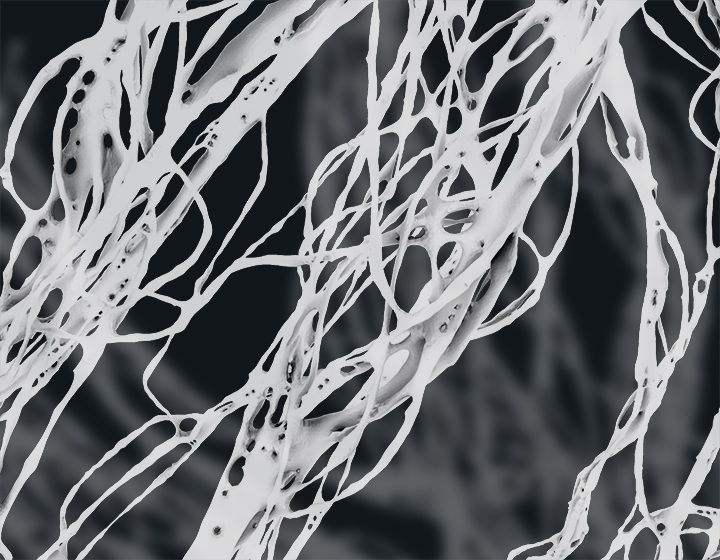
The latest in press article from the special issue. Cognitive sciencecomplexityConstructionSpontaneous orderStigmergy

Uncorrected in press Cognitive Stigmergy: A Study of Emergence in Small-Group Social Networks – Ted G. Lewis Emergence in Stigmergic and Complex Adaptive Systems: A Formal Discrete Event Systems Perspective – Saurabh Mittal Stigmergic self-organization and the improvisation of Ushahidi – Janet Marsden Artificial intelligenceCognitive sciencecomplexityEpistemologyExtended Mindsocial epistemologySocial SciencesSpontaneous orderStigmergy

The penultimate paper to the CSR EM issue by the super team of Theiner, Allen and Goldstone. CognitionCognitive sciencecomplexityExtended MindPhilosophy of mindsocial epistemologySocial Sciences

Here is a video piece commemorating a decade since Varela’s passing with some lovely footage of him speaking. Though it’s titled as part 1, I can’t find the subsequent parts and I can’t find anything on the associated website. BrainCognitionCognitive neuroscienceCognitive sciencecomplexityconsciousnessEmbodied cognitionEpistemologyExtended MindFrancisco Varelaneurosciencephilosophical psychologyPhilosophy of mindqualiasocial epistemologyVarela
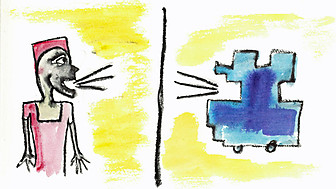
A discussion on the BBC World Service (H/T to David Livingston Smith). Artificial intelligenceCognitionCognitive neuroscienceCognitive sciencecomplexityPhilosophy of mind

Marge and my intro now available as an uncorrected proof. Stay tuned for the rest of the papers comprising this special issue. According to Andy Clark “[M]uch of what goes on in the complex world of humans, may thus, somewhat surprisingly, be understood in terms of so-called stigmergic algorithms” (Clark, 1996, p. 279; 1997, p. 186).…
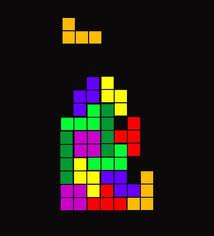
EM finds some currency in the business world. In the work entitled the “Extended Mind” Andy Clark and David Chalmers asked where does the mind stop and the world end? This question led them to looking at our “gameified” world and the classic game of Tetris. Clark and Chalmers found a piece of work done…

A recent paper from Journal of the Philosophy of History. Alasdair MacIntyrecomplexityEpistemologyExtended MindHannah ArendtMichael OakeshottPhilosophyPhilosophy of historySocial SciencesSpontaneous orderTradition
This article from a special issue of Review of Philosophy and Psychology. Artificial intelligenceAustrian SchoolBodyCognitionCognitive neuroscienceCognitive sciencecomplexityEmbodied cognitionExtended Mindphilosophical psychologyPhilosophy of mindReview of Philosophy and PsychologySocial Sciences
 manwithoutqualities