Browse by:

Dennett on Wieseltier vs. Pinker

This from Edge Postmodernism, the school of “thought” that proclaimed “There are no truths, only interpretations” has largely played itself out in absurdity, but it has left behind a generation of academics in the humanities disabled by their distrust of the very idea of truth and their disrespect for evidence, settling for “conversations” in which…
Taking the Super out of the Supernatural

Watching Bryan Magee and Tony Quinton discussing Spinoza (and Leibniz) reminded me of a piece I did several years ago that was very pantheistic in its conclusion. Here is the first half or so. There’s something horribly plausible about Ralph’s arguments, religion arising out of man’s unique awareness of his own mortality. . . . In…

Science as collective knowledge

Here is the into to Kristina’s article. In contemporary philosophy of science it has become a truism to claim that scientific knowledge is social knowledge. Yet there is a diversity of views about what is “social” in scientific inquiry and why it is of epistemic interest (Rolin, 2004). One approach to understanding the “social” in…

Intuition Pumping: Dennett Interview

3:AM Magazine: Dennett plugging his latest. See also Real People: Personal Identity without Thought Experiments. CognitionCognitive neuroscienceconsciousnessDaniel DennettIntuition pumpnaturalismphilosophical psychologyPhilosophyPhilosophy of mindReligionsciencethought experiments

Persons and the Extended-Mind Thesis

An extract from Lynne Rudder Baker’s paper: Cognitive scientists have become increasingly enamored of the idea of extended minds. The extended-mind thesis (EM) is the claim that mentality need not be situated just in the brain or even within the boundaries of the skin. EM is the modal claim that it is possible that the…

Oakeshott on the Character of Religious Experience: Need There be a Conflict Between Science and Religion?

Here is the intro from Tim Fuller’s essay from Zygon. Michael Oakeshott rarely acknowledged specific intellectual debts. In Experience and Its Modes (1933), however, he cited as major influences on his thinking G. W. F. Hegel’s Phenomenology of Spirit (1807) and F. H. Bradley’s Appearance and Reality (1893). Oakeshott was invoking the tradition of Hegelian/British idealism,…

Oakeshott Symposium on Science and Religion

This is the first of six contributions to a symposium published in Zygon, vol. 44, no. 1 (March 2009). Abstract. This paper introduces a symposium discussing Michael Oakeshott’s understanding of the relationship of religion, science and politics. Essays by Elizabeth Corey, Timothy Fuller, Byron Kaldis, and Corey Abel are followed by a review of Corey’s recent…

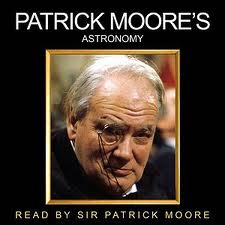
Patrick Moore

So long to a great character and a great Brit, a reassuring fixture to so many of our lives. The Telegraph The Guardian New York Times astronomyBBC Televisionpatrick moorescience