Browse by:

Cultural-historical activity theory and the zone of proximal development in the study of idioculture design and implementation

Robert Lecusay, Lars Rossen, and Michael Cole’s intro: The absence of context and culture from the early history of the cognitive sciences was, according to Gardner (1987), the result of a general attempt by cognitive scientists to “factor out these elements to the maximum extent possible,” (p. 41). The traditional vision of cognition framed human…

Empathy and the Extended Mind

Here is the intro to Joel’s article: Often, I tell a joke and the people around me laugh. (Sometimes this laughter even appears to be sincere.) I usually take this reaction to mean that they find my comment amusing. I like to smile at babies whenever possible and relish the bright-eyed facial animation and gestures…

Herbert Simon

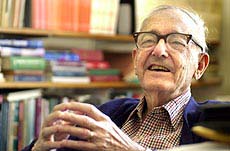
Since I missed marking the birth of Simon on the 15th, here’s a belated posting of an obituary by his student Edward A. Feigenbaum. (I’m pleased to report that my co-edited project with Roger Frantz commemorating the centenary of HS’s birth is coming together very nicely. HS’s daughter has been incredibly responsive towards the project). Herbert…

Why Music Makes Our Brain Sing

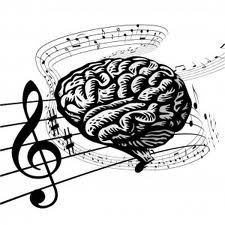
Robert Zatorre and Valorie Salimpoor on the neuroscience of music MUSIC is not tangible. You can’t eat it, drink it or mate with it. It doesn’t protect against the rain, wind or cold. It doesn’t vanquish predators or mend broken bones. And yet humans have always prized music — or well beyond prized, loved it.…

Intuition Pumping: Dennett Interview

3:AM Magazine: Dennett plugging his latest. See also Real People: Personal Identity without Thought Experiments. CognitionCognitive neuroscienceconsciousnessDaniel DennettIntuition pumpnaturalismphilosophical psychologyPhilosophyPhilosophy of mindReligionsciencethought experiments

Persons and the Extended-Mind Thesis

An extract from Lynne Rudder Baker’s paper: Cognitive scientists have become increasingly enamored of the idea of extended minds. The extended-mind thesis (EM) is the claim that mentality need not be situated just in the brain or even within the boundaries of the skin. EM is the modal claim that it is possible that the…

Mark Rowlands on the Extended Mind

Here’s Mark’s intro from his paper from a special issue of Zygon on The Extended Mind and Religious Thought from a few years back. The view known as the extended mind, following Andy Clark and David Chalmers (1998), also goes under a number of aliases. Clark and Chalmers themselves also refer to their view as active…