Browse by:

Adam Smith as a Scottish Philosopher

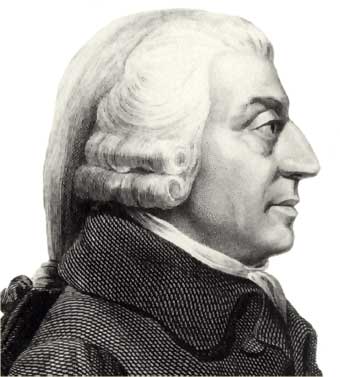
Below is the intro to Gordon Graham’s chapter. Was Adam Smith a Scottish philosopher? The question seems an odd one. He was a philosopher and he was Scottish. What more could we need to know, in order to arrive at the simple answer ‘yes.’ And in any case, why does it matter? On reflection, however, neither…

Probability is the Very Guide of Life

Bishop Butler’s quote “Probability is the Very Guide of Life” (Joseph Butler, The Analogy of Religion, Natural and Revealed, to the Constitution and Course of Nature (Charlottesville: Ibis, n.d.), is one that I invoke from time to time in the most unlikeliest of contexts. (The other Butler quote I invoke from time to time in “identity…

The Avuncular David Hume

Hume is on my mind especially in regard to my current work on Adam Smith. To this end, I’ve been re-watching Bryan Magee’s series The Great Philosophers from ’87. I’ve especially enjoyed the Hume discussion with John Passmore. Magee is an expositor second to none despite the fact that his expert guests are more intimate with-…

Hayek’s Post-Positivist Empiricism: Experience Beyond Sensation

Here is Jan Willem Lindemans‘ intro and conclusion to his chapter: The philosophical foundations of Hayek’s works are not beyond dispute (Caldwell, 1992; Gray, 1984; Hutchison, 1992; Kukathas, 1989): was Hayek a rationalist or an empiricist; did he follow Kant or Hume, Mises or Popper? Difficulties arise because these questions touch upon social theory, political…

Smith on the death of Hume

Letter from Adam Smith, LL.D. to William Strachan, Esq. Kirkaldy, Fifeshire, Nov. 9, 1776. DEAR SIR,— It is with a real, though a very melancholy pleasure, that I sit down to give some account of the behavior of our late excellent friend, Mr. Hume, during his last illness. Though, in his own judgment, his disease…

What to Believe Now: Applying Epistemology to Contemporary Issues

Yet another strong Wiley title. David Coady also did a fine job of guest editing EPISTEME for a themed issue on Conspiracy Theories (aside from Harry Frankfurt’s little book where else would a title in mainstream academia have the word “shit” so prominent – see Pete Mandik’s paper). David HumeEPISTEMEEpistemologyJason StanleyKnowledgeKnowledge Managementsocial epistemology

Of the External Senses

This essay is well worth a read. H/T to Brian Glenney for bringing it to my attention (I hang my head in shame for not having read it before). Adam SmithCognitionCognitive neuroscienceCognitive scienceDavid HumeDescartesEssayexternal worldhumeLockePhilosophyPhilosophy of mindqualiaSmithSocial SciencesTreatise of Human Nature

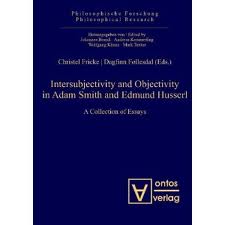
Intersubjectivity and Objectivity in Adam Smith and Edmund Husserl

This is a highly unusual collection worth checking out, co-edited by the very excellent Dagfinn Føllesdal – for the first time here is a work that seriously brings Adam Smith into the orbit of cogsci: Contents Preface Introduction Contributors Can we have objective knowledge of the world? Can we understand what is morally right or wrong?…

The Amygdala Made Me Do It

James Atlas reviews the latest spate of books on biological determinism. Artificial intelligenceCharles DuhiggCognitionCognitive neuroscienceCognitive sciencecomplexityconsciousnessDaniel KahnemanDavid HumeEmbodied cognitionGilbert Rylephilosophical psychologyPhilosophy of mindqualiaTony DungyTreatise of Human NatureWilliam James

Locating Conscious Properties in a Material World

Two reviews of  Gerald Vision’s Re-Emergence: Locating Conscious Properties in a Material World By Philip Goff By Kevin Morris CognitionCognitive neuroscienceCognitive scienceColin McGinncomplexityDavid HumeEmergenceEmergentismMental propertyPhilosophy of mindPhilosophy of sciencePhysical propertyPhysicalismProperty dualismqualiaSamuel Alexander