Browse by:

How Music Works

Some very positive reviews in The Economist, The Telegraph, the NYT, and The Independent. I’d imagine that readers attracted to Byrne’s book might also appreciate Oliver Sacks’ book Musicopilia.  Unless new profit-sharing models evolve, musicians can no longer make a living from recording. Something will have to give, he says: “I smell another revolution in the works.” The flip…


CFP: Philosophical Approaches to Social Neuroscience

Special Issue of Cognitive Systems Research Edited by Leslie Marsh (Medical School, University of British Columbia) and Philip Robbins (Department of Philosophy, University of Missouri) A Confluence of Interest It’s been twenty-five years or so since Gazzaniga’s (1985) empirically motivated work that understood the brain as a kind of hermeneutic device or “interpreter” that evolved in…

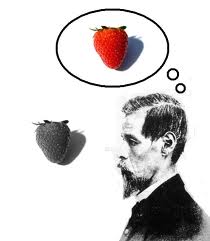
Whatever Next? Predictive Brains, Situated Agents, and the Future of Cognitive Science

Coming soon in Behavioral and Brain Sciences – a target article by Andy Clark: Abstract: Brains, it has recently been argued, are essentially prediction machines. They are bundles of cells that support perception and action by constantly attempting to match incoming sensory inputs with top-down expectations or predictions. This is achieved using a hierarchical generative model that aims…

Cognitive Spread: Under What Conditions Does the Mind Extend Beyond the Body?

This from the European Journal of Philosophy. Unfortunately, the citation – Fisher, J. (2009), ‘Critical Notice of The Bounds of Cognition’, Journal of Mind and Brain, 29: 345–57. should be: Fisher, J. (2008). ‘Critical Notice for The Bounds of Cognition’, Journal of Mind and Behavior, 29: 345-357. Andy ClarkCognitionCognitive neuroscienceCognitive scienceconsciousnessEmbodied cognitionExtended Mindphilosophical psychologyPhilosophy of mind