Stigmergy and emergent behaviour
This simulation from Jean Lievens. Cognitive sciencecomplexityEmergenceExtended MindExternalismSpontaneous orderstigmergicStigmergy
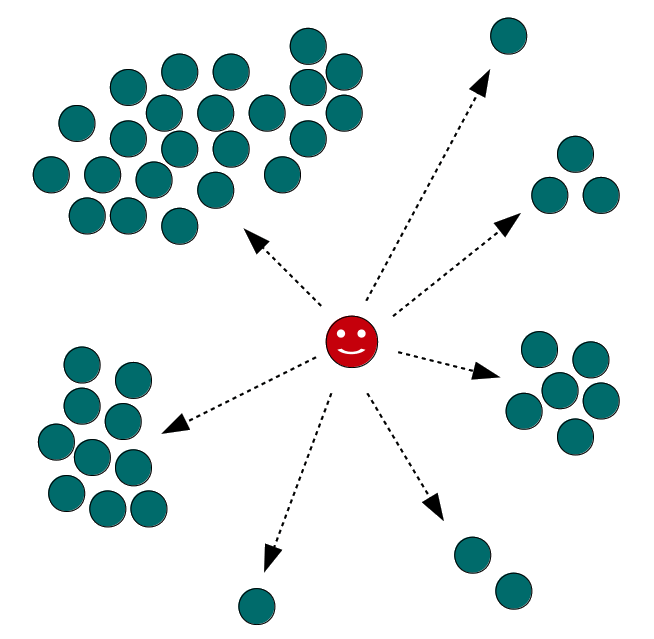
This simulation from Jean Lievens. Cognitive sciencecomplexityEmergenceExtended MindExternalismSpontaneous orderstigmergicStigmergy

A survey of swarming, a sub-topic of complexity. No mention of stigmergy though. Collective intelligencecomplexitycraig reynoldsdistributed knowledgeiain couzinSpontaneous orderStigmergySwarm behaviour

This from Froese, Gershenson, and Rosenblueth. The extended mind hypothesis has stimulated much interest in cognitive science. However, its core claim, i.e. that the process of cognition can extend beyond the brain via the body and into the environment, has been heavily criticized. A prominent critique of this claim holds that when some part of the…

Born on this day in 1899. It’s to analytical (social) epistemology’s (and philosophy of mind’s) impoverishment and shame that Hayek is not that well-known beyond the tiresome caricatures. For all my Hayekana see here. The featured image was very generously given to me by the highly exceptional Walt Weimer. Austrian Schoolcomplexityconsciousnessdistributed cognitiondistributed knowledgeEconomicsFriedrich Hayekphilosophical psychologyPhilosophy…
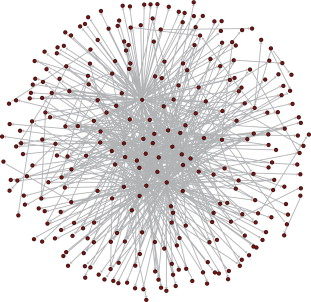
Extracts from Jimmy’s paper: The web has experienced a recent proliferation of design expert communities in domains from software engineering (e.g. Sourceforge and Github) to art (DeviantArt and others). These communities have become hotbeds of creative interaction, with users posting their projects, closely interacting on new endeavors, and engaging in spirited discussion about their craft.…

Here are some excerpts from Janet’s fascinating paper. In late 2007 in Kenya, US educated Kenyan journalist Ory Okolloh had become one of the main sources of information about the election and the violence that broke out soon after. Because of the government‟s ban on live reporting and censorship of the mainstream media, Okolloh solicited…

Some excerpts from Lars’ paper. When the concept of stigmergy was first introduced in 1959 by the French entomologist Pierre-Paul Grassé (1959), an important step towards understanding the coordination of collective activities in social insects was made. Today, the concept of stigmergy is well established within the field of entomology (Theraulaz and Bonabeau, 1999). Turning…
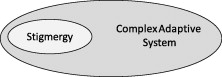
Some extracts from Saurabh Mittal’s paper. A natural system is not a monolithic system but a heterogeneous system made up of disparity and dissimilarity, devoid of any larger goal. The system just “is.” Examples of such systems include ant colonies, the biosphere, the brain, the immune system, the biological cell, businesses, communities, social systems, stock…
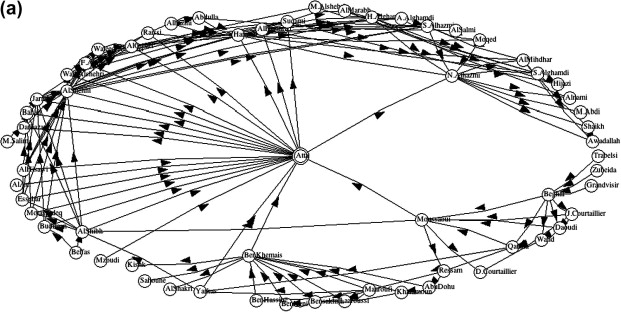
This paper proposes a model and theory of leadership emergence whereby (1) small social groups are modeled as small world networks and a betweeness metric is shown to be a property of networks with strong leadership, and (2) a theory of group formation based on stigmergy explains how such networks evolve and form. Specifically, dominant…

Even though this special issue has been available for a while, since it is the March issue, it’s an opportune time to give it another plug. I’ll run some extracts from each paper over the coming weeks. complexityExtended MindExternalismhuman stigmergysituated cognitionsocial epistemologystigmergic cognitionStigmergy
 manwithoutqualities