Hayek, Popper, and the Causal Theory of the Mind
Ed Feser’s contribution. causal theory of mindedward feserFred DretskeFriedrich HayekHayek in MindHilary PutnamJerry FodorKarl Popperphilosophical psychologyPhilosophy of mind

Ed Feser’s contribution. causal theory of mindedward feserFred DretskeFriedrich HayekHayek in MindHilary PutnamJerry FodorKarl Popperphilosophical psychologyPhilosophy of mind
Don Ross’ chapter. ConnectionismDon RossFriedrich HayekHayek in MindIndividualismphilosophical psychologyPhilosophy of mindSensory Order
The very excellent Josh Rust won the publisher’s prize for his chapter. computationalismConnectionismFriedrich HayekHayek in MindJerry FodorJohn Searlejoshua rustnaturalismphilosophical psychologyPhilosophy of mindthe sensory orderzenon pylyshyn
Neuroscientist Erol Başar erol basarFriedrich HayekHayek in Mindhebbheisenbergneurosciencephilosophical psychology
Joaquín Fuster’s thoughts on Hayek. Cognitive neuroscienceFriedrich HayekHayek in MindJoaquin FusterSelf-organizationSensory Order
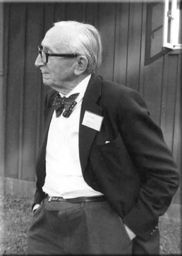
Three sections: Neuroscience — Philosophy of Mind — Mind and Sociality Austrian SchoolCognitive scienceFriedrich HayekHayek in Mindneurosciencephilosophical psychologyPhilosophy of mind
From Advances in Austrian Economics PROLOGUE It is probably no more justified to claim that thinking man has created his culture than that culture created his reason (Hayek, 1952/1979, p. 155). For Hayek, intelligence is manifest through a reciprocal coalition with the artifactual (social and physical), a causal integration that can take ontogenetic, phylogenetic, individual,…
Nice paper from Galen Strawson. Hayek’s The Sensory Order (1952) is missing though (salient extract below). See also Hayek in Mind: Hayek’s Philosophical Psychology. Hayek’s discussion of the mind–body problem speaks directly to a topic that has dominated philosophy of mind for the past 35 years – qualia (quale for singular), a term of art that…
It’s been two years since this volume was published. Austrian SchoolBrainCognitive neuroscienceCognitive sciencecomplexityconsciousnessEmbodied cognitionExternalismFriedrich HayekHayek in Mindphilosophical psychologyPhilosophy of mindqualiarationalismRoad to Serfdomsituated cognitionSpontaneous order
Some extracts from Thierry’s paper: Contemporary analysis usually divides games of chance into three dimensions. In Machina and Schmeidler’s (1992) terms, this division can be viewed based on the example of an urn containing 90 balls of different colors, out of which an agent pulls a ball, of which he must ex ante guess its…
 manwithoutqualities