Browse by:

Hayek and Philanthropy

Conversations on Philanthropy As Hayekians our thoughts naturally turned to what, if anything, Hayek might have to say on the topic of philanthropy . . . It must be conceded that Hayek’s critique of philanthropy is a rather strange affair . . . The references to Aristotle and to Aristotelian socialism reflect Hayek’s disregard for the niceties…

A DANSE MACABRE OF WANTS AND SATISFACTIONS

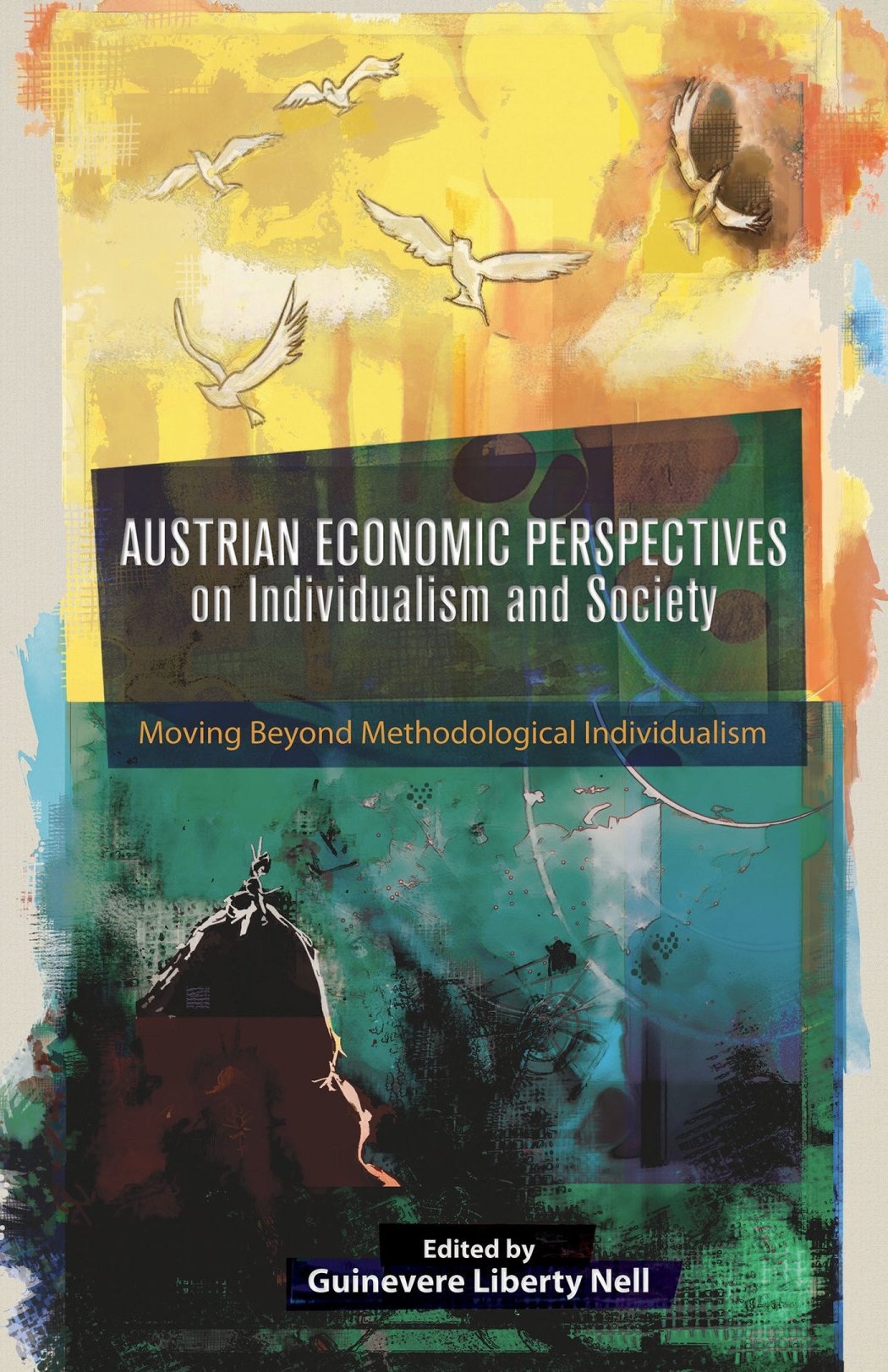
In Austrian Economic Perspectives on Individualism and Society: Moving Beyond Methodological Individualism In this chapter our aim is to rescue the meaning of liberty from the ministrations of its misguided friends and explore how it relates to human nature, culture, and economic order. Some Austrian economists have embraced liberty as the sole value. Despite the…

Bruce Caldwell on Hayek

The very excellent Bruce Caldwell (the general editor of The Collected Works of F.A. Hayek)  on Hayek — skip to 4 minutes in to avoid the preliminaries. At 59:40 The Sensory Order comes up. bruce caldwellFriedrich HayekHistory of Economic Thoughtthe sensory order

Hayek: Cognitive Scientist Avant La Lettre

From Advances in Austrian Economics PROLOGUE It is probably no more justified to claim that thinking man has created his culture than that culture created his reason (Hayek, 1952/1979, p. 155). For Hayek, intelligence is manifest through a reciprocal coalition with the artifactual (social and physical), a causal integration that can take ontogenetic, phylogenetic, individual,…

The consciousness myth

Nice paper from Galen Strawson. Hayek’s The Sensory Order (1952) is missing though (salient extract below). See also Hayek in Mind: Hayek’s Philosophical Psychology. Hayek’s discussion of the mind–body problem speaks directly to a topic that has dominated philosophy of mind for the past 35 years – qualia (quale for singular), a term of art that…

In defence of spontaneous order: Hayek and libertarianism

The Economist  Abstract  According to Adam Smith, Friedrich Hayek and everyone else who knows what he or she is talking about, well-functioning markets depend, inter alia, upon clear property rights and a judicial system that enforces agreements and resolve disputes. It’s true that Friedrich Hayek, whom Mr Linker shamelessly abuses, is the most prominent 20th-century…