John Nash
‘A Beautiful Mind’ Subject and Nobel Winner, Dies at 86 EconomicsGame Theoryjohn nashmathematicsNash equilibrium
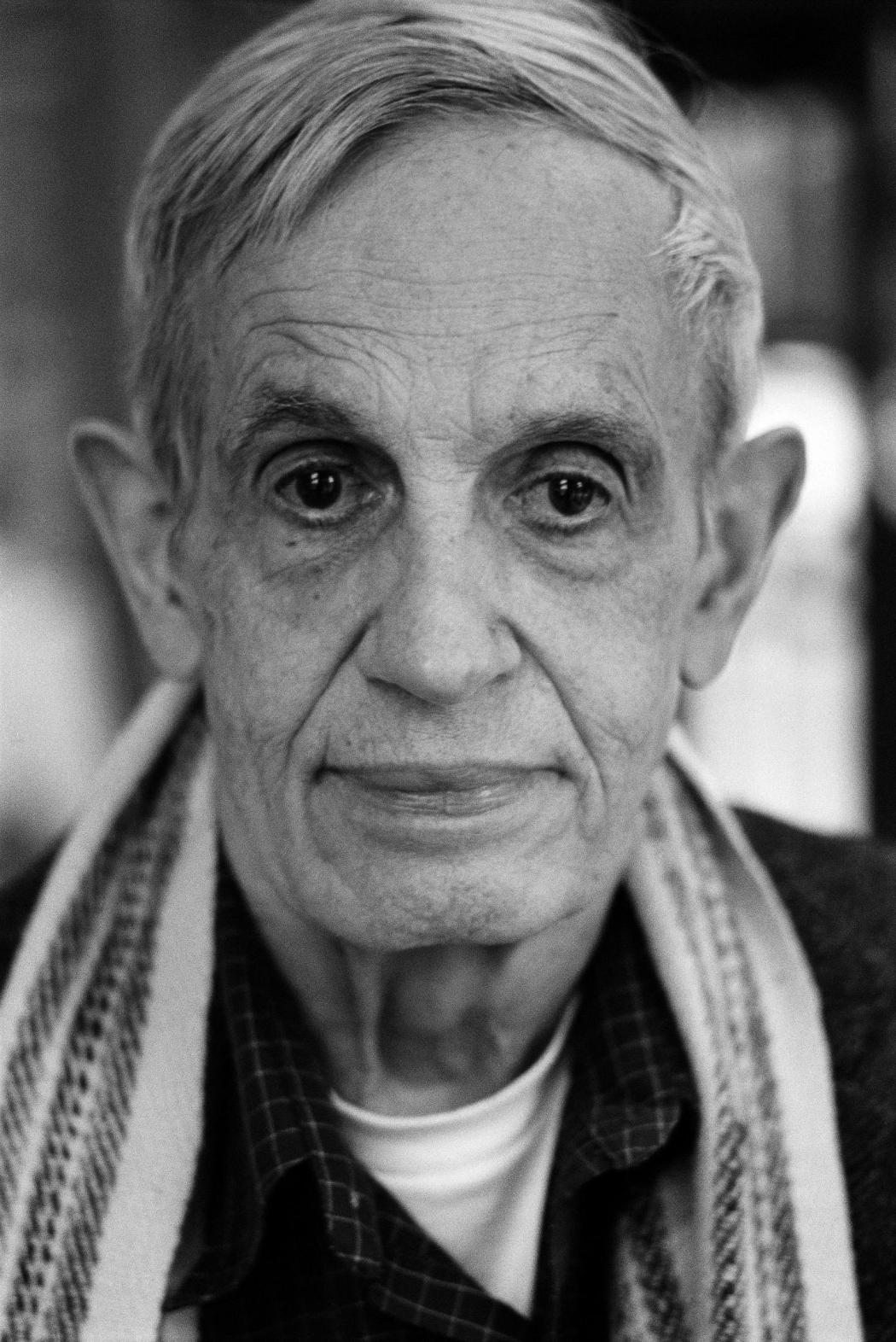
‘A Beautiful Mind’ Subject and Nobel Winner, Dies at 86 EconomicsGame Theoryjohn nashmathematicsNash equilibrium

Recently published and freely available. CatholicismEconomicsHayekLiberalismMarket economyphilosophy of social sciencePolitical philosophyrationalismsocial epistemologysocial justice
Here is the intro to Gavin Kennedy’s chapter. This chapter discusses Adam Smith’s rhetorical use of the ‘invisible hand’ in the context of his teachings on metaphors as figures of speech in his lectures on Rhetoric (Edinburgh, 1748-51; Glasgow, 1752-64 (LRBL). After Smith died (1790), a strikingly long-period of silence about his three references to…
The intro to Jack Weinstein’s chapter. In the midst of one of the most famous passages in The Wealth of Nations, Adam Smith writes “nobody ever saw a dog make a fair and deliberate exchange of one bone for another with another dog” (WN I.ii.2). In and of itself, this is probably not a noteworthy…
The intro to Gloria Zúñiga y Postigo’s essay Is the assumption of self-interested behavior assumed in economics at odds with altruism and compassion? I believe that this question—which has been formulated in various ways in the literature for the past two centuries—is the thorn that often turns us away from reconciling the Adam Smith of the…
Here is the Twitter interview conducted earlier. Adam Smithadam smith problemEconomicsmoral philosophyPropriety and Prosperity: New Studies on the Philosophy of Adam SmithTheory of Moral SentimentsWealth of Nations
Here is the intro to Roger Frantz’ chapter. ~~~~~~~ Adam Smith (1723-1790) was a polymath with several of his key concepts and theories either having modern counterparts and/or “enjoying” empirical support. Smith wrote about the origin and proper use of language, grammar, the history of astronomy and ancient physics, moral philosophy, music, dance, and poetry,…
The intro to Laurent Dobuzinskis’ chapter: As is well known, Adam Smith spent about two years in Europe, most of it in France. It was in fact during his stay in Toulouse that he began to work on what became The Wealth of Nations (WN); but what proved decisive for the deepening of his understanding…
From the very excellent Eric Schliesser. Chicago economicsEconomicsEric SchliesserKarl PopperLiberalismLibertarianismLibertyMilton FriedmanPolitical philosophySpontaneous order
Just published in Austrian Economic Perspectives on Individualism and Society: Moving Beyond Methodological Individualism Austrian EconomicsAustrian SchoolBehavioral economicscomplexityconsumerismcorey abeldistributed cognitionEconomicsguinevere liberty nellHayekIndividualismindividualityLiberalismLibertarianismLibertyMichael Oakeshottsituated cognitionsocial epistemologysocial ontologysocial realitySpontaneous orderWalker Percy
 manwithoutqualities