Browse by:

Radicalizing Enactivism: Basic Minds without Content

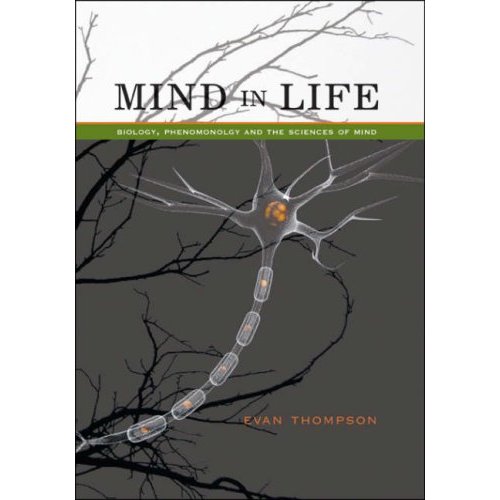
Check out this recently released book by Dan Hutto and Erik Myin. The book will be reviewed by the very excellent Tom Froese for The Journal of Mind & Behavior. Stay tuned. Speaking of enactivism see this special issue of Constructivist Foundations dedicated to Neurophenomenology. Constructivist Foundations must rate as one of the best open access journals I have…

Economics, cognitive science and social cognition

Here is the intro to Don’s paper: This essay concerns the role of economics in the interdisciplinary study of social cognition. Increasingly many economists believe that economics has such a role. Most who hold this opinion do so because they think that, to some extent, important parts of microeconomics should collapse into psychology. They think this…

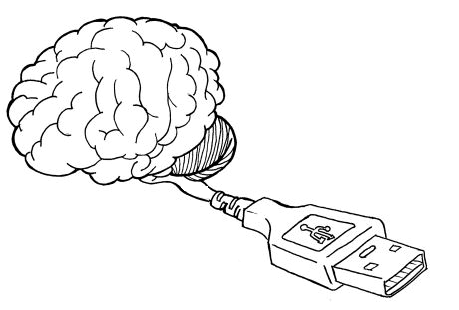
How to Build a Digital Brain

Jeff Hawkins interview. Here’s what we do inside Grok: we build this 60,000-neuron neural network that emulates a very small part of one layer of the neocortex. It’s about a thousandth the size of a mouse brain and a millionth the size of a human brain. So: not super-intelligent, but we’re using the principle by…

Andy Clark – Perceiving as Predicting

Keynote talk by Andy for the 9th International Symposium of Cognition, Logic and Communication. Andy appears @ 11:57 active externalismAndy ClarkCognitionCognitive neuroscienceCognitive scienceconsciousnessEmbodied cognitionExtended MindExternalismneurosciencePerceptionphilosophical psychologyPhilosophy of mind

The Extended Mind Thesis

The power team of Julian Kiverstein, Mirko Farina and Andy Clark have written this entry for  Oxford Bibliographies Online. Andy ClarkArtificial intelligenceCognitionCognitive neuroscienceCognitive scienceconsciousnessEmbodied cognitionExtended MindExternalismPhilosophy of mindsituated cognition

Constructing Religion without The Social: Durkheim, Latour, and Extended Cognition

Here is the intro to Matthew’s article: Where does thinking happen? The obvious and most common answer is “somewhere inside the head.” After all, this is where the brain is safely housed behind seven millimeters of protective armor. However, despite the instinctive appeal of this response, some theoretical camps have been willing to flirt with…